
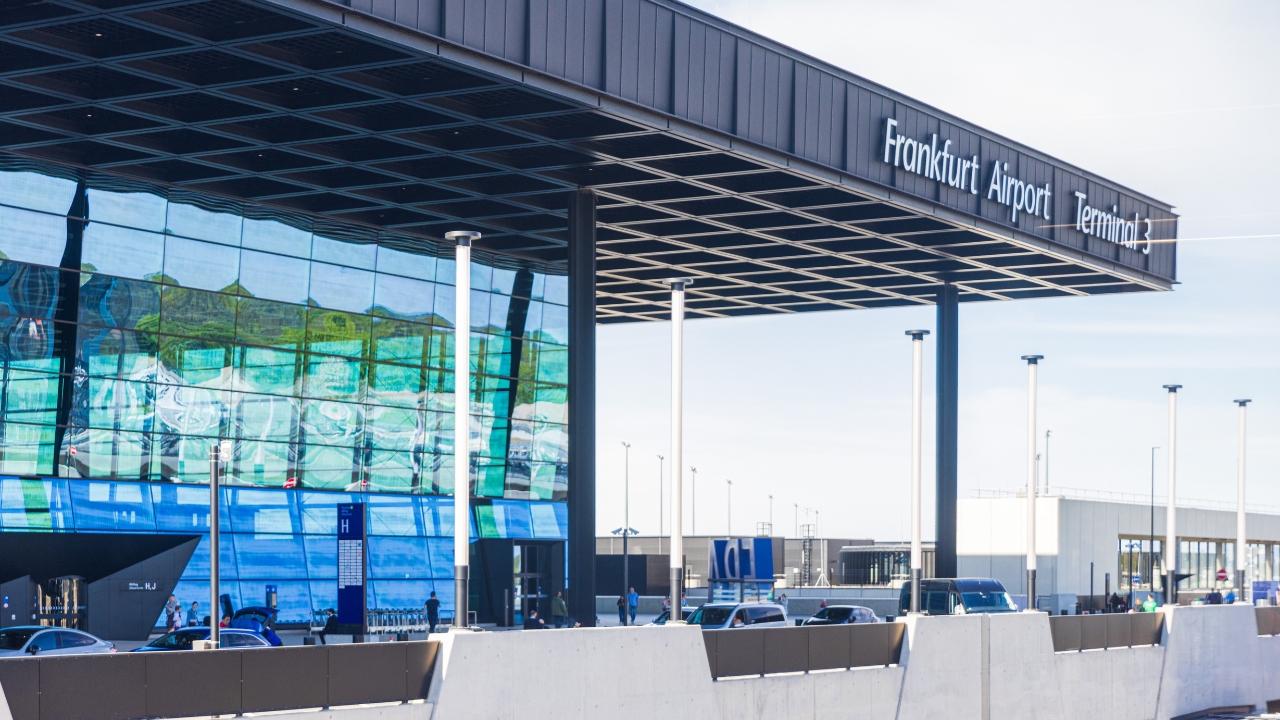
Frankfurt is one of Europe’s major arrival points for Americans flying across the Atlantic. Many U.S. travelers land there before continuing to another city in Germany, Austria, Italy, France, Spain, or another Schengen destination.
New border procedures add another factor to airport timing. Europe’s Entry/Exit System, known as EES, adds biometric registration to the border process for many non-EU visitors.
As a result, passport control may take longer than travelers expect, especially during busy arrival banks or early rollout periods.
Tight connections can become risky when Frankfurt is your first Schengen stop. In many cases, U.S. travelers must clear passport control at Frankfurt before moving on to their connecting flight inside Schengen.
A short layover can feel even shorter once walking time, lines, biometric checks, and boarding deadlines are included.
EES began rolling out on October 12, 2025, with full implementation across participating Schengen border points expected by April 10, 2026.
What EES Means for Americans
EES applies to non-EU travelers, including Americans, entering or leaving the Schengen Area for short stays. Instead of relying on traditional passport stamps, border authorities create a digital record linked to each traveler.
Border officers use that information to track arrivals, departures, and possible overstays with greater accuracy. American travelers should expect EES to add a data-collection step at participating Schengen borders. For first-time registration, that step may take longer than later trips because biometric details need to be captured and saved. Children under 12 are generally exempt in one specific area: Families should still expect children to pass through border control with the rest of their travel group. U.S. travelers flying to Frankfurt and then continuing to another Schengen destination usually clear passport control in Frankfurt. After that process, the next flight is treated as travel within the Schengen Area. After kiosk use, a traveler may still need to see a border officer or use an e-gate. EES does not replace passport control. Border control still happens, and a traveler may still need approval before entering the Schengen Area. Frankfurt’s size can add pressure. Moving between arrival gates, passport control, security checks, transfer corridors, and departure gates may take more time than expected. Airport layout can create extra delays in several cases: Several factors can slow a connection at Frankfurt. Long passport-control lines are often the biggest concern, especially when several international flights arrive around the same time. First-time EES registration may add time because travelers need to complete fingerprint or face-scan steps. Some passengers may also need extra time to use kiosks correctly, follow screen prompts, or fix scanning errors. Frankfurt Airport also requires walking. Long corridors, terminal changes, remote aircraft stands, shuttle buses, and gate changes can all cut into a short connection window. Boarding deadlines matter as much as departure times. A flight may close boarding well before the printed departure time, so a 60-minute layover may not actually give travelers 60 usable minutes. Layovers under 60 minutes are very risky for Americans entering Schengen at Frankfurt. Even a small delay on arrival can make the connection difficult. Layovers of 60 to 90 minutes may work, but they can be stressful. Travelers may have little room for passport-control lines, EES registration, walking time, or gate changes. Layovers of 90 to 120 minutes are safer for most U.S. travelers. That window gives more room for biometric registration, border checks, and movement across the airport. Layovers of 2 hours or more are best for those groups. Separate tickets add extra risk because missed-connection protection may not apply. Some travel guidance recommends allowing 2 to 3 hours when connecting through Schengen airports, especially when immigration and security delays are possible. Know your first Schengen entry point before booking. When Frankfurt is your first Schengen stop, expect passport control there. Travelers spending extra time in Germany after clearing Frankfurt can plan adult nightlife, private companionship, or premium leisure services separately, including Louisa. A single ticket usually gives stronger protection if a delay causes a missed connection. Keep your passport and boarding pass ready before reaching the border area. Having documents in hand can save time and reduce stress. Be prepared to scan your passport, face, and fingerprints. First-time EES registration can take longer than later entries. Follow signs for Connections or Transfer unless Frankfurt is your final destination. Do not follow baggage claim signs unless you need to collect bags or exit the airport. Checked luggage may continue to your final destination even if you complete EES in Frankfurt. Baggage handling depends on the ticket, airline, and routing, so confirm bag tags at check-in. EES adds biometric registration to the border process for Americans entering the Schengen Area. At Frankfurt, that matters most when the airport is your first Schengen entry point. Travel memories often start with calm, well-planned transit moments rather than rushed airport stress. Extra time can build up through passport-control lines, kiosk use, face scans, walking distance, remote gates, bus transfers, gate changes, and early boarding cutoffs. For a smoother connection, avoid very tight layovers at Frankfurt. Aim for at least 90 to 120 minutes when connecting to another Schengen flight, and choose a longer layover when traveling on separate tickets, during peak periods, with family, or as a first-time EES user.
What Happens at Frankfurt Airport
Why Connections May Feel Tight
Connection-Time Advice
Practical Tips
Summary
