
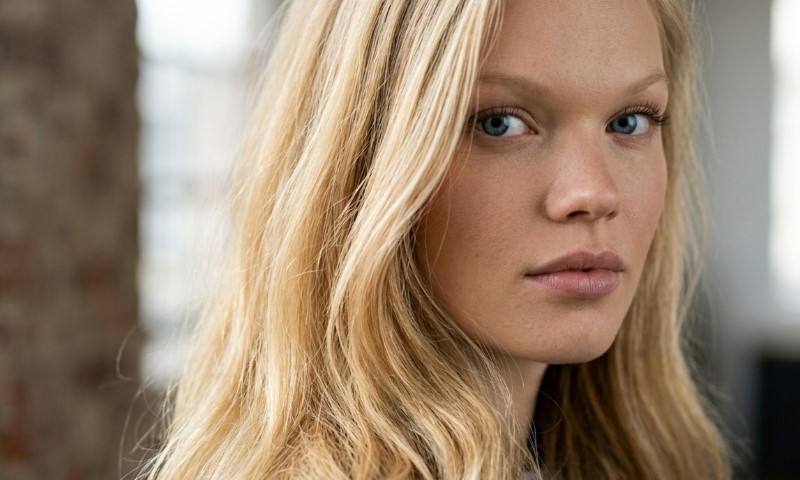
Natural blonde hair is rare because hair follicles need to produce relatively little eumelanin, the dark brown or black form of melanin. That low-pigment result is usually shaped by many inherited DNA variants, not one universal “blonde gene.”
Blonde hair appears most often in northern and eastern European ancestry groups, yet it also occurs in parts of Oceania through a separate genetic route.
Exact global prevalence is not census-grade data because no world registry tracks natural hair color, and adult dye use blurs counts. A fair answer is direct: blonde hair is rare globally, locally common in some populations, and biologically more varied than pop culture suggests.
MedlinePlus Genetics links hair color to melanin type and amount, while a UK Biobank genome study found hair color associated with more than 200 genetic variants.
1. Blonde Hair Usually Means Less Eumelanin, Not No Pigment
View this post on Instagram
Blonde hair usually appears when hair follicles produce lower amounts of eumelanin. More eumelanin gives black or brown hair, while pheomelanin contributes red and yellow tones.
| Pigment Pattern | Common Visible Result | Reader Takeaway |
| High eumelanin | Black or brown hair | Dark color often stays more stable through childhood. |
| Lower eumelanin | Blonde or light brown hair | Shade can shift with age, hormones, and sun exposure. |
| More pheomelanin relative to eumelanin | Red, strawberry blonde, or warm blonde tones | “Blonde” can include several pigment mixes. |
A pale blonde shade is not empty hair. It is hair with less dark pigment, plus whatever warm or neutral tones remain. That detail matters for parents, hair stylists, and anyone trying to describe natural color accurately.
2. Hair Color Is Polygenic, So Family Predictions Are Messy
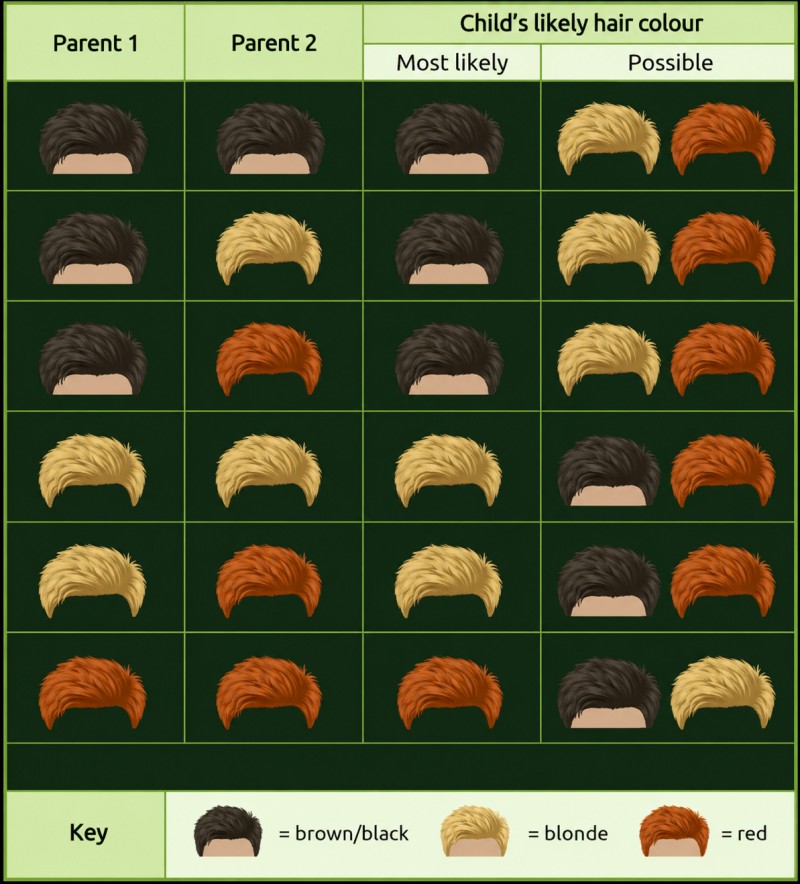
Hair color is polygenic, meaning many genes help shape the final shade. A child does not receive a single blonde or brunette switch from each parent. Small inherited signals influence how much pigment follicles make, when pigment genes turn on, and how strongly they act.
That is why two brown-haired parents can have a blonde child if each carries enough light-hair variants. It also explains why two blonde parents can have a darker-haired child when darker-pigment variants combine in the child.
Consumer DNA reports can give clues, but they cannot promise a newborn’s future hair color. Probability is not destiny.
3. One Famous Blonde Variant Works Like A Dimmer Switch
View this post on Instagram
One well-studied northern European blonde variant affects gene regulation rather than changing the whole body. Researchers studying a KITLG regulatory region found a DNA change associated with common blonde hair in northern Europeans.
That detail matters because people often confuse blonde genetics with albinism or broad medical traits. A hair-specific regulatory change can lighten hair without producing a body-wide pigment disorder. In plain language, the gene system works more like a dimmer in the follicle than a broken pigment factory.
4. Blonde Hair Did Not Evolve Only Once
Blonde hair did not come from one ancestor or one continent. A major example comes from the Solomon Islands in the South Pacific, where natural blonde hair occurs among some Indigenous Melanesian people with dark skin.
A Solomon Islands study identified a change in TYRP1 as a major cause of blond hair in Solomon Islanders. The mutation was reported at a frequency of 26% in the Solomon Islands and absent outside Oceania in the study data.
That case corrects a lazy assumption: blonde hair does not automatically mean recent European ancestry. Similar-looking traits can arise through separate genetic paths.
5. Many Blonde Children Become Brown-Haired Adults
Blonde childhood hair often darkens with age. A childhood hair-color study found that 70.8% of children who were phenotypically blond in early childhood progressed to brown hair by advanced childhood in the sample studied.
Parents see the pattern in ordinary life. A toddler with pale hair may reach school age with dark blonde or light brown hair. Puberty can deepen color again. For personal records, baby photos are weak evidence of adult natural color unless paired with later childhood or adolescent photos.
A practical point follows: anyone choosing a salon color based on childhood hair should compare against current root growth and skin undertone, not a sunny preschool picture.
6. Blonde Hair Is Rare Globally, But Not Equally Rare Everywhere
Exact global numbers are shaky. Popular demographic summaries often repeat a roughly 2% world-population estimate for natural blonde hair, but that number should be treated as broad public shorthand rather than a formal genetic census.
One public country summary gives a quick view of regional variation, yet it should not be mistaken for primary genetic surveillance.
A better explanation is geographic. Variants linked with lighter hair occur at higher frequencies in northern Europe and in some isolated Oceanian populations.
In the beauty industry, that regional context is also why Slavic hair extensions are often discussed for naturally lighter shades, softer textures, and easier blending with blonde or light brown hair.
In many regions of Africa, East Asia, South Asia, and the Americas, dark hair is far more common because high-eumelanin pigment patterns are more widespread.
For readers, the consequence is simple. Blonde hair can look ordinary in Stockholm or Helsinki, unusual in São Paulo or Lagos, and genetically different in Honiara compared with Copenhagen.
7. Blonde Hair And Blue Eyes Do Not Always Travel Together
Blonde hair and blue eyes often appear together in popular imagination, but genetics does not force that pairing. Genes near HERC2 and OCA2 are strongly tied to eye pigmentation and also appear in hair-color research, yet hair shade and eye shade remain separate traits with overlapping biology.
Natural blondes can have brown, hazel, green, or blue eyes. Siblings can also share one feature and differ in another. A family may have one blonde child with blue eyes and another blonde child with hazel eyes, even with the same parents.
8. Dye, Sun, And Styling Hide Natural Rarity
Adult blonde hair is harder to count than childhood blonde hair because salon color is common, highlights are subtle, and sunlight can lighten exposed lengths. A person may appear blonde in summer photos while natural root color is dark blonde or light brown.
For beauty decisions, the distinction matters. Natural pale blonde often shows oil, brassiness, and root contrast differently from dyed blonde. Bleached hair also needs more maintenance because lightening removes pigment from the hair shaft and can leave hair more vulnerable to dryness and breakage.
The most useful checkpoint is not the label “blonde.” It is current natural root shade, eye color, skin undertone, and the level of upkeep someone can live with.
9. DNA Prediction Is Improving, But Hair Color Still Resists Certainty
DNA-based hair color prediction can help research and forensic work, but it remains probabilistic. The HIrisPlex-S research platform is used for eye, hair, and skin color DNA phenotyping research, and a 2026 Genes evaluation reported 81% sensitivity for blond hair and 52% sensitivity for brown hair in one tested sample.
For a consumer, the human consequence is clear: a DNA test saying “likely blonde” should not be treated as a guarantee. Hair color can shift during childhood, and many variants have small effects. Good genetics reports speak in probabilities; weak ones turn probability into certainty.
What People Usually Miss About Blonde Hair
The biggest missed point is that “rare” does not mean “genetically simple.” Red hair is often discussed through MC1R, although even red hair has more nuance. Blonde hair is usually even more distributed across the genome.
Another missed point is age. A natural blonde adult is rarer than a blonde toddler in many European-ancestry families because pigment output can increase during childhood. That is why adult natural blonde hair carries a different meaning than childhood blonde hair in family stories, identity, and salon decisions.
There is also a social trap. Blonde hair is visible, culturally loaded, and heavily dyed, so people often talk about it as a beauty category before treating it as biology. The biology is quieter: melanin amounts, follicle regulation, ancestry patterns, and age-related gene activity.
Bottom Line
Natural blonde hair is rare because the genetic conditions for low eumelanin in hair follicles are unevenly distributed across human populations and often change with age. It is not caused by one universal gene, and it does not always come with blue eyes, pale skin, or European ancestry.
The strongest current explanation combines pigment chemistry, many DNA variants, local population history, and childhood darkening. The most honest answer is also the most useful one: blonde hair is rare worldwide, common in certain regions, and far more genetically varied than the stereotype.
