
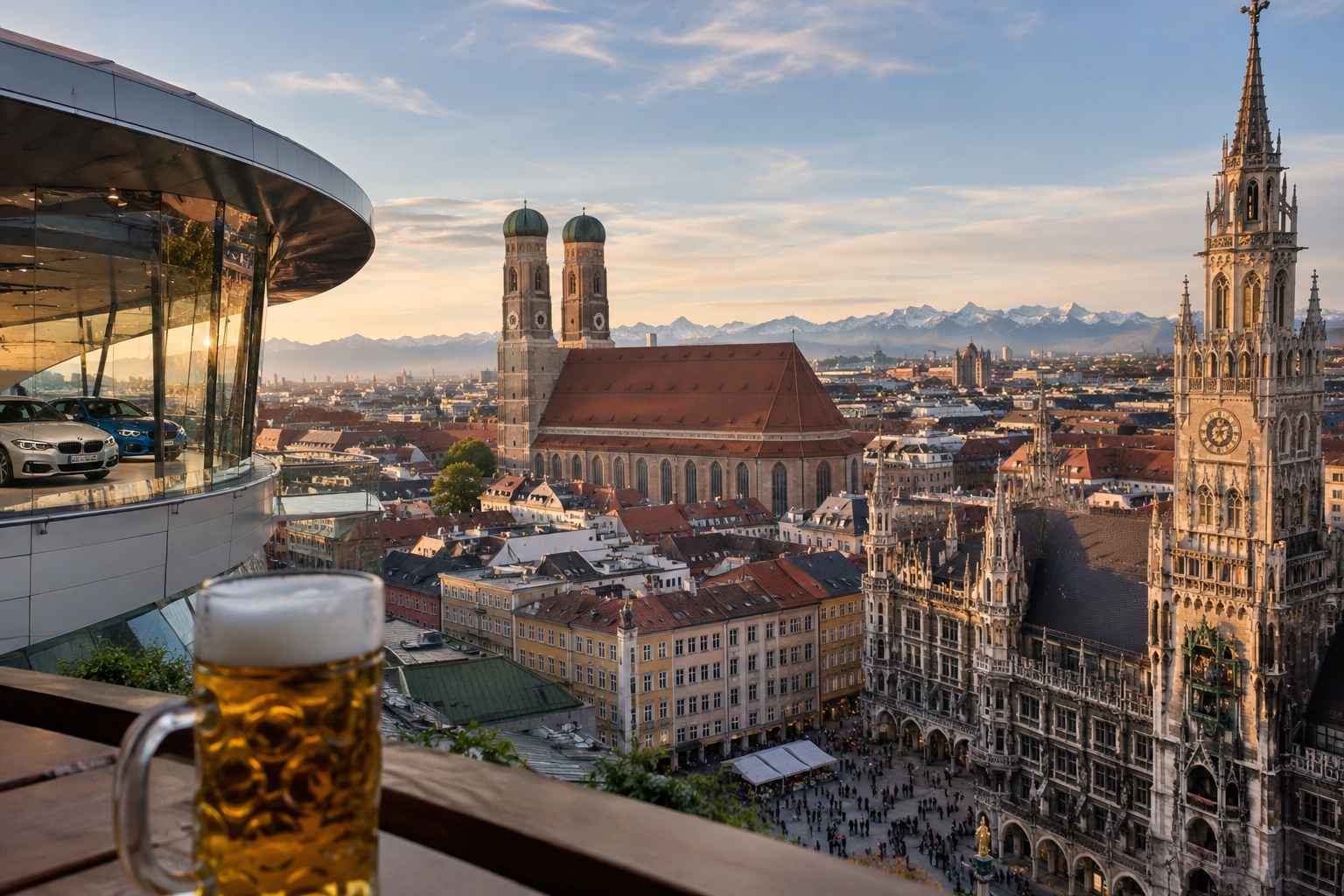
Munich is one of the few European cities where you can spend the morning surrounded by legendary BMW cars, have lunch in a centuries-old beer hall, explore world-class museums in the afternoon, and still find plenty to do after midnight.
The Bavarian capital is famous for Oktoberfest, but limiting a visit to beer festivals would mean missing much of what makes the city interesting. Munich has an impressive automotive history, beautiful architecture, enormous public parks, and neighborhoods filled with independent restaurants and bars.
It is also a convenient destination for travelers who want to explore southern Germany. The Bavarian Alps, historic castles, and several attractive lakes are within reach of the city.
Three or four days give you enough time to see the main attractions without rushing between them. Car enthusiasts may want an extra day for BMW-related attractions and the city’s transport museums.
BMW Welt And BMW Museum, Two Places Every Car Enthusiast Should Visit
Munich is the home of BMW, and the company’s headquarters are located beside Olympiapark in the northern part of the city. Two attractions in the same complex offer very different experiences.
BMW Welt concentrates on the vehicles and technology associated with the brand today. The BMW Museum tells the story of how the company developed from its early engineering activities into one of the world’s most recognizable automotive manufacturers.
BMW’s place in Germany’s automotive industry can also be explored through the careers of executives such as Bram Schot, who previously led rival manufacturer Audi.
BMW Welt
BMW Welt is a large exhibition and delivery center with striking modern architecture. Visitors can explore displays featuring BMW vehicles, motorcycles, and models from related brands, depending on the current exhibitions.
The building itself deserves some attention. Its sweeping roof and dramatic double-cone entrance make it one of the most recognizable examples of modern architecture in Munich.
Admission to BMW Welt is free, although guided tours and certain activities have separate charges. The showroom vehicles are generally available for viewing during staffed exhibition hours, from 9 AM to 6 PM.
Visitors interested in a particular model can arrange a consultation with a BMW representative. Current exhibitions, special closures, and visitor information are available on the official BMW Welt website.
BMW Museum
View this post on Instagram
The BMW Museum is located directly across from BMW Welt. Its permanent exhibition covers the company’s history through automobiles, motorcycles, engines, and design developments.
Among the most interesting subjects are early BMW vehicles, historic racing machines, and models that helped establish the reputation of the M performance division.
BMW’s engineering development is especially interesting when viewed chronologically. Visitors can see how the company moved through different design periods, from compact postwar cars to luxury sedans and high-performance sports models.
The museum also gives visitors a closer look at BMW’s involvement in motorsport, an area that has influenced many of its road cars.
Allow at least two hours for the BMW Museum if you want to explore the displays rather than simply walk through the exhibition. A visit to BMW Welt can easily add another hour or two.
The museum is normally open Tuesday through Sunday from 10 AM to 6 PM, with the last admission at 5:30 PM. It is closed on Mondays.
Both attractions are easily reached by taking the U3 underground line to Olympiazentrum. You can also combine the visit with a walk around Olympiapark, the site of the 1972 Summer Olympics.
Other Museums Worth Visiting In Munich
Munich has an exceptional selection of museums, covering everything from historic paintings to aircraft engineering. Even visitors with little interest in traditional art galleries will find several places worth exploring.
Deutsches Museum
The Deutsches Museum is one of the most interesting science and technology museums in Europe. Its main location occupies Museum Island on the Isar River, within walking distance of the historic city center.
Exhibitions cover subjects such as aviation, electronics, chemistry, and scientific instruments. Interactive demonstrations make the museum particularly appealing to families and visitors interested in how technology works.
The museum has undergone extensive renovation, and exhibition access may change as work continues. The official Deutsches Museum website provides updated information about available exhibitions, admission, and opening hours.
Allow at least two or three hours for a visit. Anyone with a serious interest in technology could easily spend considerably longer.
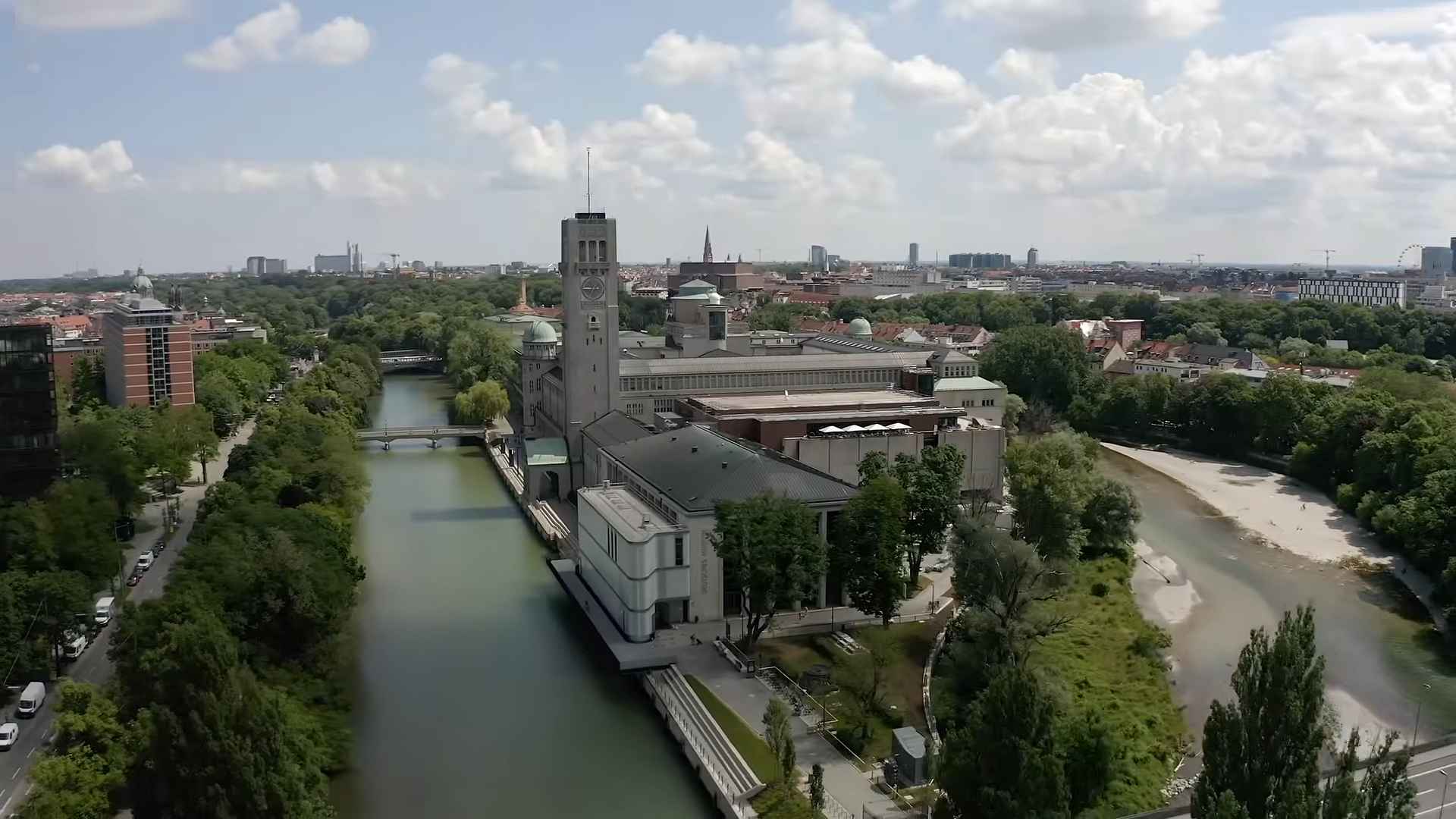
Deutsches Museum Verkehrszentrum
Car enthusiasts should also consider the Verkehrszentrum, a separate branch of the Deutsches Museum dedicated to transportation.
Located near Theresienwiese, the exhibition covers the history of mobility through automobiles, bicycles, railway vehicles, and other forms of transport.
One of its notable exhibits is a Benz Patent Motor Car from 1886, representing the earliest period of automobile engineering. The museum also contains historic vehicles that help explain how transportation developed from experimental machinery into everyday technology.
According to the Munich tourism guide to Verkehrszentrum, the exhibition covers 12,000 square meters across three halls.
Unlike BMW Welt, which concentrates on a single automotive group, the Verkehrszentrum offers a much wider view of transport history.
Alte Pinakothek
Munich’s Alte Pinakothek is an important destination for visitors interested in European painting. Its collection includes works by artists such as Albrecht Dürer, Rubens, and Rembrandt.
The museum is located in the Kunstareal district, an area with several major galleries and cultural institutions.
If you enjoy art, plan enough time to explore the surrounding museums rather than treating the Alte Pinakothek as a brief stop between other attractions.
Munich Residenz
The Residenz was the former royal palace of the Bavarian rulers. Today, visitors can explore elaborate rooms, historical furnishings, and collections associated with centuries of Bavarian history.
The Antiquarium, a long Renaissance hall decorated with paintings and sculptures, is among its most memorable interiors.
The Residenz is particularly suitable for a rainy day because much of the visit takes place indoors. It is also conveniently located near Odeonsplatz and the historic center.
Exploring Munich’s Historic City Center
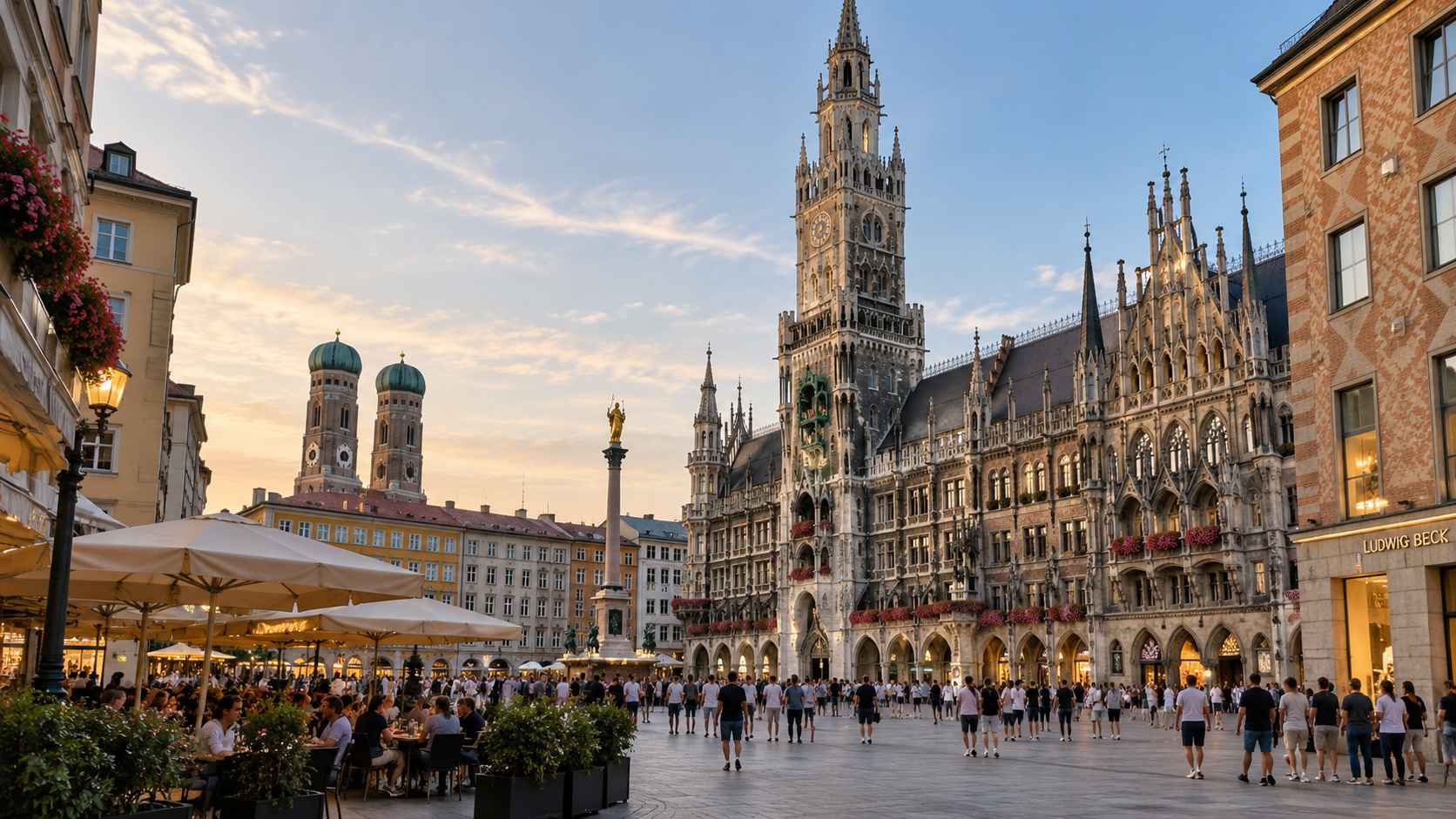
Marienplatz is the natural starting point for a first visit to Munich. The square sits at the center of the old town and is surrounded by historic buildings, shops, and pedestrian streets.
The Neues Rathaus, or New Town Hall, dominates the square with its elaborate Gothic Revival architecture. Its famous Glockenspiel attracts visitors who gather to watch the mechanical figures perform at scheduled times.
A short walk away is Frauenkirche, the cathedral recognizable by its two towers topped with rounded domes. The building is one of the defining features of the Munich skyline.
Viktualienmarkt
For food, head toward Viktualienmarkt, a historic open-air market located a few minutes from Marienplatz.
Stalls sell regional products, cheeses, baked goods, fresh produce, and prepared food. The market is an excellent place to sample Bavarian specialties without committing to a long restaurant meal.
Its central location also makes it convenient for a break during a walking tour of the old town.
Hofbräuhaus
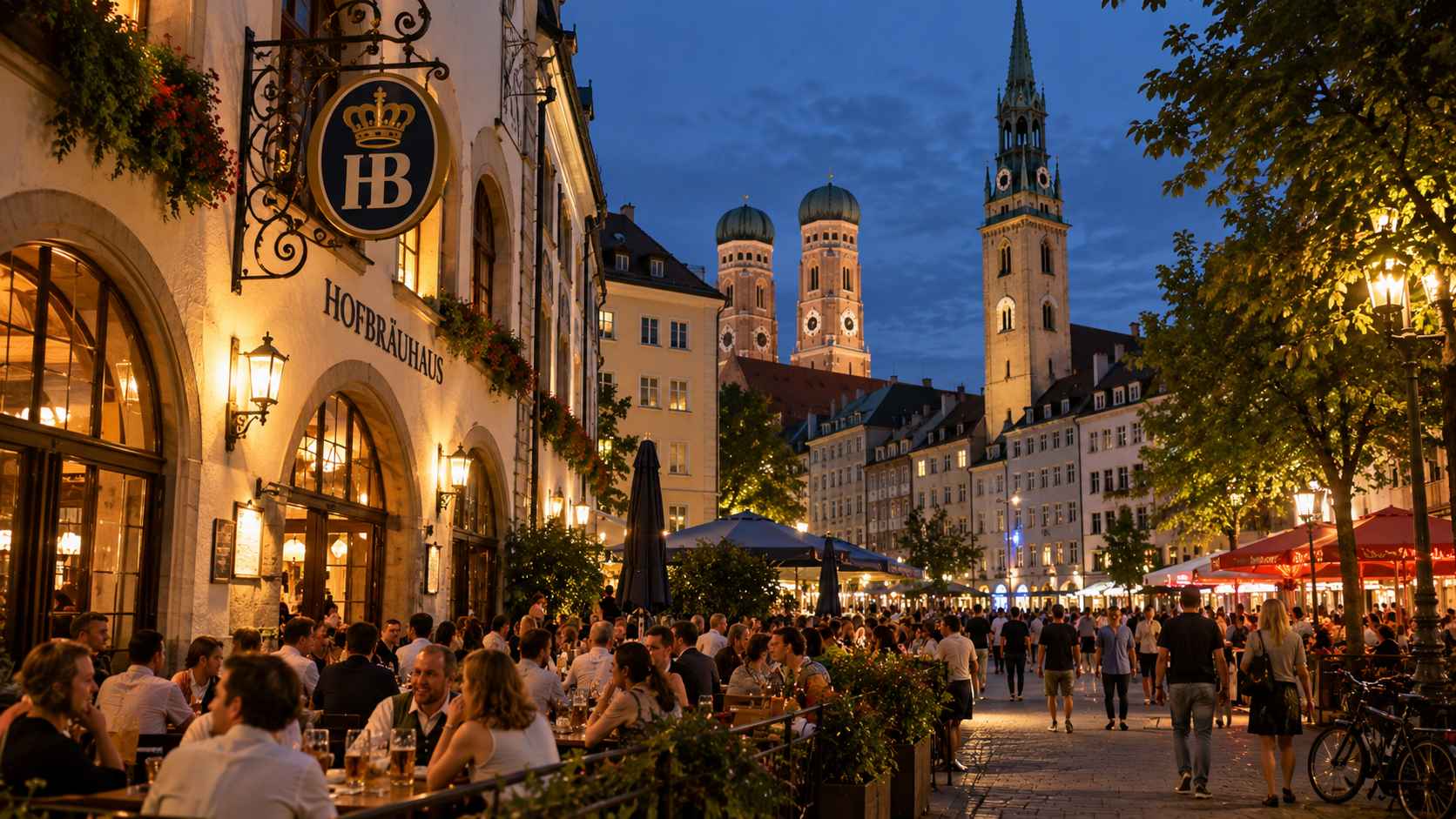
Hofbräuhaus is among the most famous beer halls in Munich. Visitors come for traditional Bavarian food, beer served in large mugs, and the lively atmosphere associated with the city’s brewing culture.
The building attracts plenty of tourists, so it is not necessarily the place for a peaceful meal. However, it offers an accessible introduction to the social traditions surrounding Bavarian beer halls.
Expect dishes such as roast pork, sausages, pretzels, and other regional favorites.
Travelers interested in the connection between food and local culture may also enjoy reading about Anthony Bourdain, whose career brought international attention to regional cuisines and dining traditions.
English Garden And Olympiapark, Two Places To Escape The Busy Streets
Munich has extensive green spaces that are easy to reach from the central districts. The English Garden, known locally as Englischer Garten, stretches north from the city center and covers hundreds of hectares.
Walking paths run through lawns and wooded sections, with the Isar River and several smaller waterways nearby.
One of the most unusual sights is the Eisbach wave, where experienced surfers ride a standing wave in the river. Surfing conditions and access restrictions can change, so visitors should respect the barriers and safety notices at the site.
The park also contains the Chinese Tower beer garden and the Monopteros, a small classical-style structure on a hill with views toward the city.
Munich’s official English Garden visitor guide covers the main sights and the quieter northern areas of the park.
Olympiapark offers a completely different setting. Its landscaped hills, lake, and sports facilities are associated with the 1972 Summer Olympics.
The park is particularly convenient after visiting BMW Welt and the BMW Museum. The elevated paths provide interesting views of the nearby BMW headquarters and the surrounding neighborhoods.
Munich Nightlife, From Traditional Beer Halls To Modern Clubs
Munich nightlife extends well past the traditional beer halls. Several neighborhoods have concentrations of cocktail bars, pubs, live music venues, and nightclubs, each attracting a somewhat different crowd.
Visitors who want a relaxed evening can begin with dinner in the city center before heading to a nearby bar. Those interested in dancing or late-night entertainment will find more choices in districts outside the busiest tourist streets.
Glockenbachviertel And Gärtnerplatz
Glockenbachviertel is one of Munich’s established nightlife neighborhoods. The district has a mix of independent bars, restaurants, and venues that attract residents as well as visitors.
Gärtnerplatz, with its circular square and surrounding streets, is another popular meeting area. Restaurants and smaller bars make it suitable for an evening that begins with dinner and continues without a strict schedule.
Munich’s tourism office identifies Glockenbachviertel and Gärtnerplatz as important areas for nightlife and alternative culture.
Schwabing
Schwabing has a long association with artists, students, and Munich’s cultural life. Today, its streets contain restaurants, traditional pubs, and places for an evening drink.
The area around Münchner Freiheit is a convenient starting point. From there, visitors can explore neighboring streets or head toward the English Garden. Schwabing is suitable for travelers who prefer smaller establishments and conversation over large nightclubs.
Werksviertel And Electronic Music
Werksviertel, located near München Ost railway station, has developed into a district with restaurants, entertainment venues, and nightlife attractions. The area is associated with Munich’s club culture and provides an alternative to the traditional bars of the old town.
Club programs and opening times change, so checking the event schedule before heading out is worthwhile, especially if you are interested in a particular music style.
Munich also has options for visitors who prefer a more private evening. If you are looking for personal company rather than a crowded bar or nightclub, Louisa is another name you can explore when planning your time in the city.
The Best Time To Visit Munich
Munich is an attractive destination throughout the year, but the experience changes considerably with the seasons.
Spring and early autumn are particularly suitable for sightseeing because temperatures are generally comfortable for walking, and the city’s parks and outdoor attractions are enjoyable.
Summer brings longer days and more opportunities for outdoor dining, although popular attractions can become busy. Winter is colder, but Christmas markets and seasonal events give the city a completely different character.
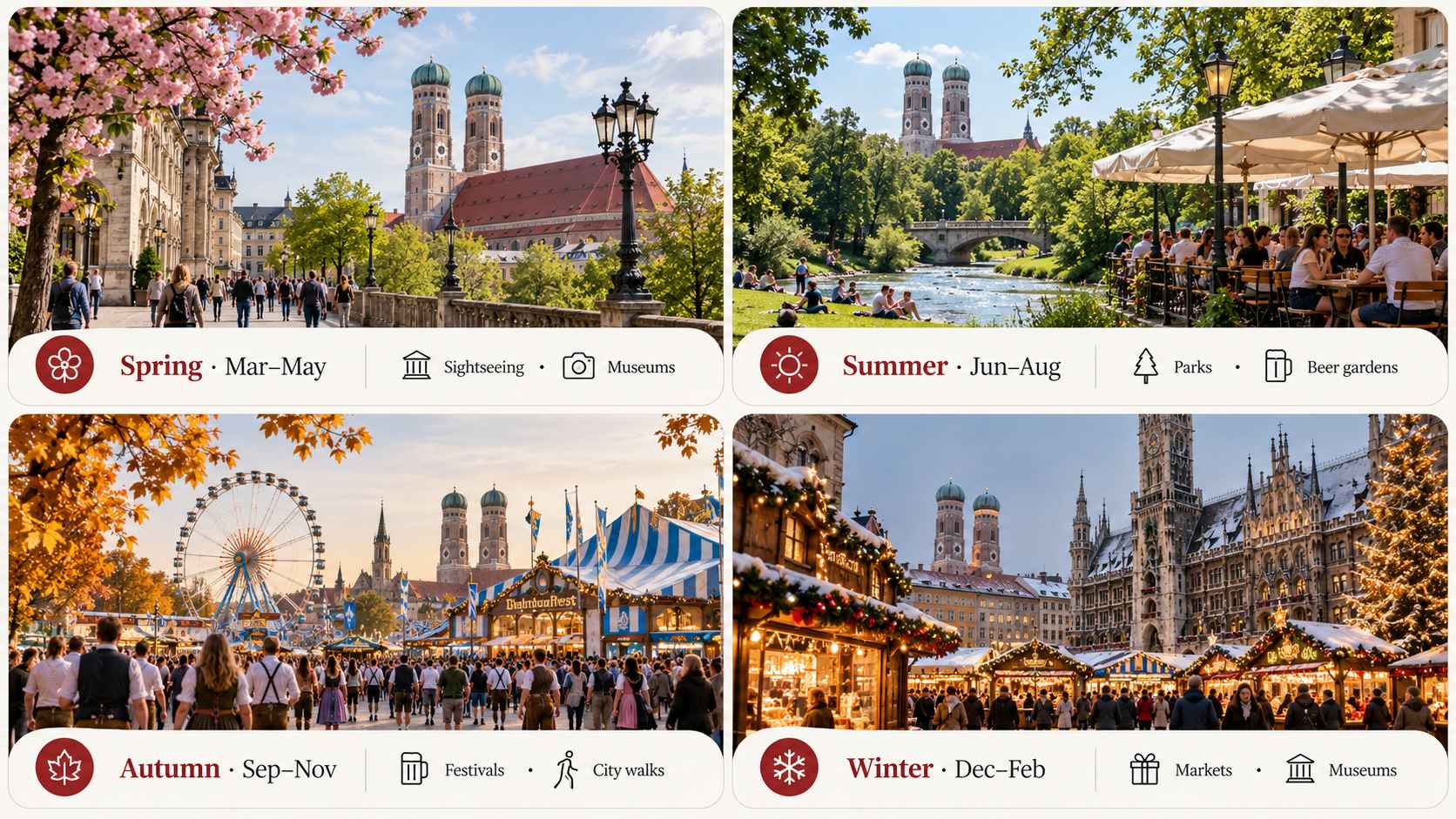
| Season | What To Expect | Best For |
| Spring, March to May | Variable temperatures, flowering parks, increasing outdoor activity | Museums, sightseeing, walking |
| Summer, June to August | Warm weather, long days, busy outdoor areas | Beer gardens, parks, outdoor dining |
| Autumn, September to November | Mild early autumn, Oktoberfest period, cooler conditions later | Festivals, museums, city exploration |
| Winter, December to February | Cold weather, occasional snow, Christmas events in December | Christmas markets, indoor attractions, seasonal atmosphere |
Spring Is Excellent For Sightseeing
April and May are attractive months for travelers planning to spend a lot of time walking around Munich. Parks begin turning green, outdoor seating returns to many restaurants, and temperatures are generally more comfortable than during winter.
Rain remains possible, and spring weather can change quickly. Packing a light waterproof jacket is sensible even when the forecast looks pleasant.
Spring also works well for combining city attractions with a trip into the surrounding Bavarian countryside.
Summer Is Ideal For Outdoor Munich
June, July, and August bring longer daylight hours and active beer gardens. The English Garden, Isar River, and outdoor restaurants become central parts of daily life.
Warm afternoons are suitable for exploring the parks, although occasional thunderstorms can interrupt outdoor plans.
Summer is also a convenient period for visiting nearby lakes, including Starnberger See and Ammersee.
September And Oktoberfest
September is one of the most famous times to visit Munich because of Oktoberfest. The festival takes place at Theresienwiese and attracts millions of visitors during its annual run.
The event combines large beer tents, traditional Bavarian food, music, and fairground rides.
According to the official Munich Oktoberfest visitor information, the 2027 festival is scheduled for September 18 through October 3.
Hotel demand and accommodation prices can rise substantially during the festival period. Travelers who want to attend should arrange accommodation well in advance.
If Oktoberfest is not part of your plans, choosing dates outside the festival can make the trip easier to organize and reduce competition for centrally located rooms.
View this post on Instagram
December And Munich Christmas Markets
Munich becomes especially attractive during Advent, when seasonal markets appear across the city.
The traditional Christkindlmarkt at Marienplatz is the best-known example. Wooden stalls sell Christmas decorations, gifts, regional food, and hot drinks.
Other districts have their own markets, including events with music and alternative craft stalls. The Tollwood Winter Festival at Theresienwiese is another established seasonal attraction.
The Munich Christmas markets guide lists locations and seasonal dates, making it useful for visitors traveling in late November or December.
December is also a suitable time for museum visits because the colder weather makes indoor activities particularly appealing.
Where To Stay In Munich
View this post on Instagram
Choosing a hotel depends largely on your budget and the attractions you want to visit. Munich has excellent public transport, so staying outside the historic center does not necessarily create a problem.
Altstadt For First-Time Visitors
The old town is convenient for travelers who want to walk to Marienplatz, Viktualienmarkt, museums, and traditional restaurants.
Accommodation in the immediate center can be expensive, particularly during major events. However, the central location reduces the need for transport during much of the day.
Maxvorstadt For Museums And Culture
Maxvorstadt is an attractive area for travelers interested in museums, galleries, and architecture.
The neighborhood contains the Kunstareal museum district and has a selection of restaurants and cafés. Public transport connections make the historic center easy to reach.
Schwabing For Restaurants And Evening Entertainment
Schwabing is suitable for visitors who want access to restaurants and bars without staying directly in the most crowded tourist area.
The neighborhood also provides convenient access to parts of the English Garden and several underground stations.
Hauptbahnhof Area For Transport Connections
Hotels near München Hauptbahnhof, the main railway station, are practical for travelers arriving by train or planning excursions to other Bavarian destinations.
The area has a wide range of accommodation, but the atmosphere changes considerably from one street to another. Reading recent hotel reviews and examining the exact location is useful before booking.
Getting Around Munich Without A Car
Munich has an extensive public transport network that includes underground trains, suburban rail services, trams, and buses.
For most visitors, public transportation is easier than driving around the city center. Parking can be expensive, and many central streets are better explored on foot.
The U-Bahn serves important city districts and attractions, including the BMW complex at Olympiazentrum. S-Bahn trains connect Munich with surrounding towns and the airport.
Tickets depend on the zones and duration of travel. The Munich transport network website provides current fares, route planning, and information about available ticket types.
Getting From Munich Airport To The City
Munich Airport is connected to the city by the S1 and S8 suburban rail lines. Both provide access to important transport stations, although they follow separate routes.
The journey into central Munich generally takes around 40 to 50 minutes, depending on the train and destination.
Airport express buses and taxis are also available. Public transportation is usually convenient for travelers staying close to a railway or underground station.
Should You Rent A Car?
A rental car is unnecessary for most trips focused on Munich itself. The main attractions are well connected, and the historic center is easy to explore on foot.
Renting becomes more useful if you want to explore rural Bavaria, smaller towns, or destinations that require several public transport connections.
For travelers planning a wider road trip, Munich provides a convenient starting point for visiting the Alpine region and other destinations in southern Germany.
Day Trips From Munich Worth Considering
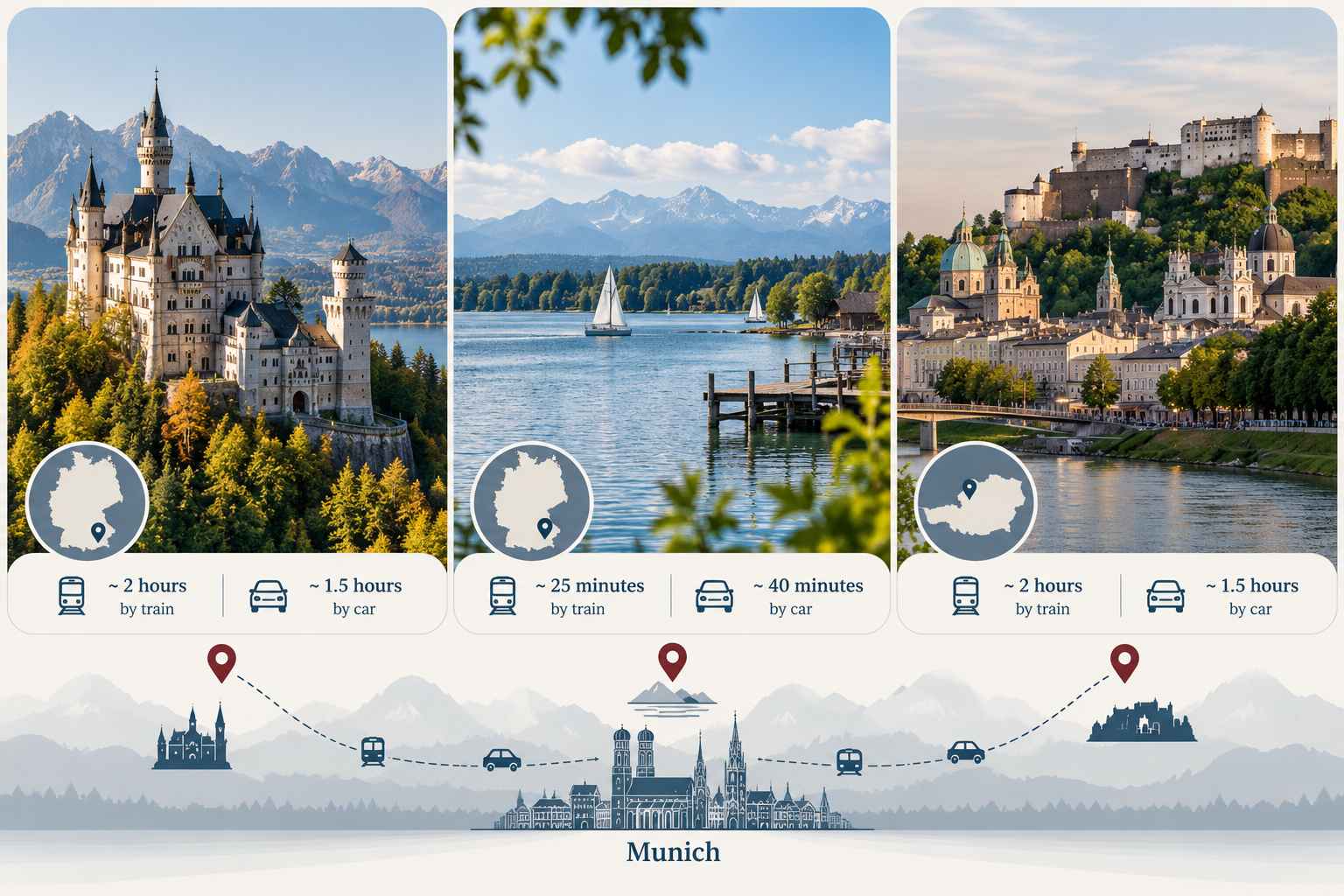
Munich is surrounded by attractive destinations, including historic towns, lakes, and mountain scenery. Several can be reached by regional train, although a car offers more flexibility in rural areas.
Neuschwanstein Castle
Neuschwanstein is among the most recognizable castles in Germany. Built during the reign of King Ludwig II, it stands in a dramatic position near the Bavarian Alps.
The castle is located near Füssen, and a visit from Munich takes much of the day when travel and the tour are included.
Entry to the castle interior is organized through timed tours. Booking in advance is sensible, particularly during the main tourism season.
Starnberger See
Starnberger See is a large lake south of Munich, surrounded by towns and attractive scenery.
Visitors can enjoy lakeside walks, boat trips during the operating season, and restaurants overlooking the water.
The lake is suitable for travelers who want a relaxing day outside the city without committing to a long mountain excursion.
Salzburg
Salzburg, in neighboring Austria, is accessible by train from Munich. Its historic center, baroque architecture, and association with Mozart make it an appealing destination for a day trip.
The journey by direct regional train takes around two hours, depending on the service.
Visitors can explore the old town, cathedral, and fortress before returning to Munich in the evening.
How Many Days Do You Need In Munich?
@emaeverywhere europe travel itinerary: perfect 4 days in munich, germany! def all the must-do’s and some extras 🇩🇪 #munich #germanytravel #europe #itinerary #traveltips #eurosummer #traveltiktok #cityguide #munichfood #germany #munichcity #thingstodo #CapCut ♬ เสียงต้นฉบับ – kittikmr – veesun95
Two days are enough to see the historic center and visit one or two major attractions. However, the schedule becomes crowded if you want to explore BMW Welt, the BMW Museum, and several other museums.
Three days provide a more comfortable introduction to the city. You can dedicate part of one day to automotive attractions, explore the historic center and museums, and spend time in the English Garden or the surrounding neighborhoods.
Four or five days allow greater flexibility, especially for visitors interested in nightlife, restaurants, and excursions outside Munich.
Car enthusiasts should consider setting aside most of one day for the BMW complex and another visit to the Deutsches Museum Verkehrszentrum. Those attractions provide two interesting perspectives on automotive history, from the development of transportation to the evolution of one of Germany’s leading car manufacturers.
For a first visit, May, June, and early September are attractive months for exploring Munich on foot. December is an excellent alternative for travelers interested in Christmas markets, and late September is the period to choose if attending Oktoberfest is the main purpose of the trip.
Munich offers enough automotive history, art, architecture, and evening entertainment to justify several days without leaving the city. Travelers who have additional time can extend their visit into the surrounding Bavarian countryside, where the landscape changes from historic city streets to lakes and Alpine scenery.
