

A single photograph can influence how people understand a news story, judge a business, or form opinions about someone online. However, with digital editing tools and artificial intelligence becoming more accessible, identifying whether an image accurately represents reality is not always straightforward.
Visual authenticity in digital communication refers to the credibility, origin, and accurate presentation of images shared online. It helps people understand whether visual content is genuine, modified, artificially generated, or presented without its original context.
As businesses, content creators, and internet users depend more on visual communication, understanding image authenticity has become essential for building trust and preventing misinformation.
Why Visual Authenticity Matters in Digital Communication

Images often communicate information faster than written explanations. A photograph can create an immediate impression, even when viewers know very little about its background.
This makes visual authenticity particularly important when images influence opinions, purchasing decisions, or public understanding.
Visual Content Influences Public Perception
People regularly encounter photographs through social media, news websites, advertisements, and professional platforms. These visuals shape their understanding of public figures, products, and current events.
For example, an edited photograph showing a celebrity attending an event they never visited could create a misleading story. Even when the image looks convincing, its message may be inaccurate.
The problem becomes more serious when misleading photographs spread quickly through social media. People may share images based on emotional reactions without checking whether the accompanying information is accurate.
Public figures and online personalities, including Jenna Marbles, have built audiences through visual platforms, where photographs and videos play a major role in shaping public perception.
Checking where an image originated helps readers avoid accepting misleading information.
Trust Depends on Accurate Representation
Businesses and content creators often use photographs to communicate with audiences. Product images, customer experiences, and promotional visuals can influence purchasing decisions.
Problems arise when images exaggerate product features or present fictional situations as genuine experiences.
For instance, an online clothing retailer might use heavily edited photographs that make fabric colours or product details appear different from reality. Customers who receive something unexpected may question the retailer’s credibility.
Clear descriptions, accurate photographs, and appropriate editing disclosures help audiences understand what they are viewing.
How Artificial Intelligence Is Changing Visual Content

Artificial intelligence has introduced new possibilities for creating photographs, illustrations, and digital artwork. These technologies support creative work but also make it easier to produce realistic images of events that never happened.
Understanding this distinction matters because visual quality alone cannot establish authenticity.
Realistic Images Are Not Always Genuine
AI-generated images can depict fictional people, imaginary locations, and situations that appear realistic. Such visuals are useful for storytelling, advertising concepts, and creative projects.
The concern begins when artificially created images are presented as documentary photographs.
For example, a fictional photograph showing damage after a natural disaster could mislead viewers if shared without an explanation.
The same concern applies to fabricated celebrity photographs, misleading product demonstrations, and invented historical images. Without proper context, viewers may mistake creative content for factual evidence.
A realistic appearance should never be treated as sufficient evidence of authenticity.
Digital Verification Tools Support Image Checks
People who regularly work with online photographs can use different methods to investigate questionable visuals.
For additional verification, readers can check an AI image detector when assessing whether a photograph may have been artificially generated. Such tools examine image characteristics and provide assessments, but their results are not conclusive.
These systems can produce incorrect classifications, particularly when photographs have been compressed or edited.
A photograph taken with a real camera might be incorrectly classified, while some artificially generated images may go undetected. Therefore, automated assessments should be treated as supporting information rather than final proof.
Combining automated checks with source verification provides a more responsible approach than depending entirely on one result.
How to Check Whether an Online Image Is Trustworthy
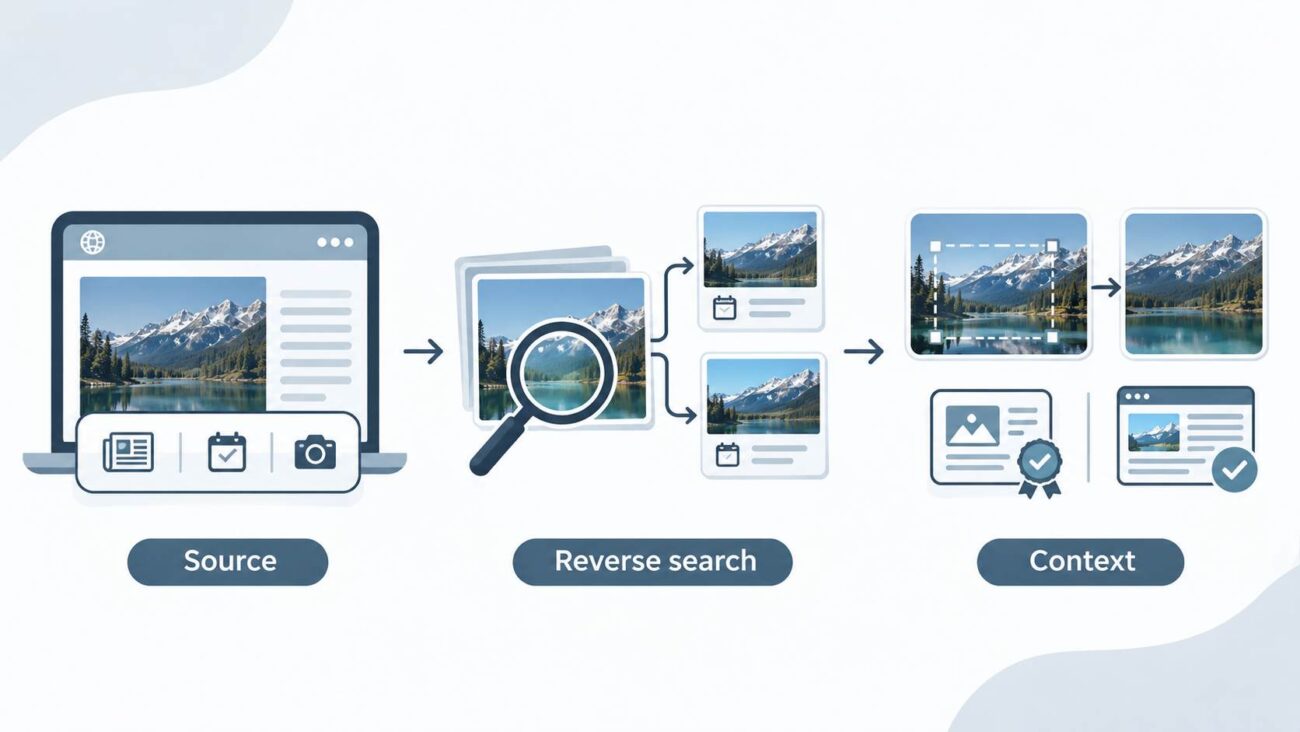
Verifying visual content does not always require technical expertise. Several straightforward checks help readers understand where an image originated and whether it supports the claims attached to it.
The most useful approach involves examining both the photograph and its surrounding information.
Check the Original Source
Start by identifying who first published the image. Photographs from established news organisations, official accounts, or identifiable photographers may provide more information about their origin.
Look for publication dates, captions, photographer credits, and explanations of the situation.
A photograph shared without background information deserves additional attention, especially when supporting an unusual claim.
Use Reverse Image Searching
Reverse image search services can help identify where a photograph appeared previously.
For example, a picture described as showing a recent political demonstration might actually come from an unrelated event several years earlier.
Finding an earlier version can reveal missing context and prevent old photographs from being mistaken for current evidence.
However, finding no earlier matches does not automatically mean an image is authentic. Newly created or privately shared images may not appear in search results.
Examine Editing and Context
Look carefully at captions, unusual visual details, and whether independent sources confirm the event.
Some images contain Content Credentials that record information about their creation or editing history. However, missing credentials do not automatically indicate manipulation, and existing credentials do not prove that the depicted event occurred.
Readers should also distinguish between harmless adjustments and misleading alterations. Cropping an image for better composition is different from removing important details that change its meaning.
Why Businesses and Content Creators Should Prioritise Authenticity

Visual authenticity is relevant to journalists, businesses, influencers, and digital publishers. Responsible visual communication helps audiences distinguish genuine evidence from creative illustrations.
For journalists such as Isa Soares, accurate visual reporting is particularly important because audiences may interpret accompanying photographs as evidence of real events.
Clear publication standards can also reduce misunderstandings and protect professional credibility.
Be Transparent About Edited Images
Image editing is common in photography, marketing, and digital design. Adjusting lighting, cropping photographs, or correcting colours does not automatically make content deceptive.
Problems occur when alterations change important facts or create expectations that the original subject cannot support.
Creators should explain significant modifications whenever those changes might affect viewers’ interpretations.
Establish Clear Visual Content Standards
Organisations can reduce confusion by introducing basic image publication practices.
These include checking image sources, maintaining original files, reviewing captions, and identifying AI-generated illustrations when their origin matters.
For example, a company publishing customer testimonials should confirm that photographs genuinely relate to the individuals or experiences being described.
Such practices are particularly useful for businesses publishing customer photographs, product demonstrations, or informational content.
Conclusion
Visual authenticity is becoming increasingly important in modern digital communication because realistic images cannot always be accepted as reliable evidence.
By checking sources, examining context, understanding artificial intelligence, and communicating transparently about image editing, individuals and organisations can make better decisions about the visuals they share.
Ultimately, trustworthy digital communication depends not only on how convincing an image looks but also on whether it represents information accurately and responsibly.
