
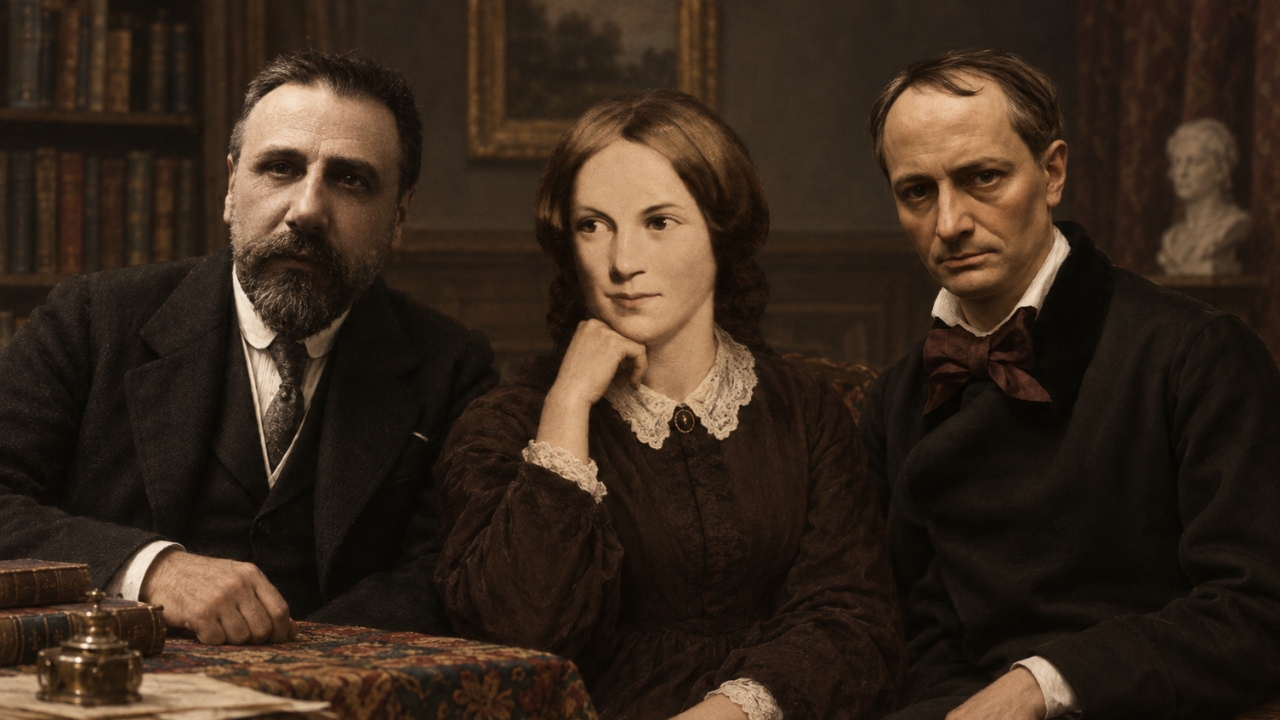
Brussels has a curious habit of appearing in famous lives at decisive moments. Some major figures were born there, others arrived as students, exiles, experimenters, or established artists looking for somewhere to work.
René Magritte spent some of his most productive years in a modest house in Jette. Charlotte Brontë turned her Brussels experience into material for fiction. Victor Hugo looked across the Grand-Place while living in political exile. Adolphe Sax publicly demonstrated the instrument that would carry his name around the world.
Connections like those make Brussels’ cultural history unusually broad. Painting, literature, architecture, music, chemistry, and early modern science all left identifiable traces around the Belgian capital.
Artists Who Helped Shape the Image of Brussels
Brussels became an important artistic centre long before Belgian independence in 1830. Renaissance painting, Art Nouveau architecture, and Surrealism each produced figures whose relationship with the city can still be followed on foot.
Pieter Bruegel the Elder
Pieter Bruegel the Elder is often associated with the wider Flemish Renaissance, yet the closing years of his life belonged closely to Brussels.
Bruegel married Mayken Coecke at Brussels’ Notre-Dame de la Chapelle in 1563. He later died in the city in 1569 and was buried in the same church. A surviving funeral plaque remains there, according to the city’s Renaissance history guide.
His Brussels period coincided with the final stage of a remarkably short career. Only around 40 paintings attributed to him survive.
The Royal Museums of Fine Arts of Belgium hold the world’s second-largest collection of Bruegel the Elder paintings after Vienna’s Kunsthistorisches Museum, as highlighted in the museum’s Bruegel collection overview.
For anyone exploring Brussels through famous residents, Bruegel provides a link to a city that looked very different from the boulevards and institutions seen today.
Victor Horta
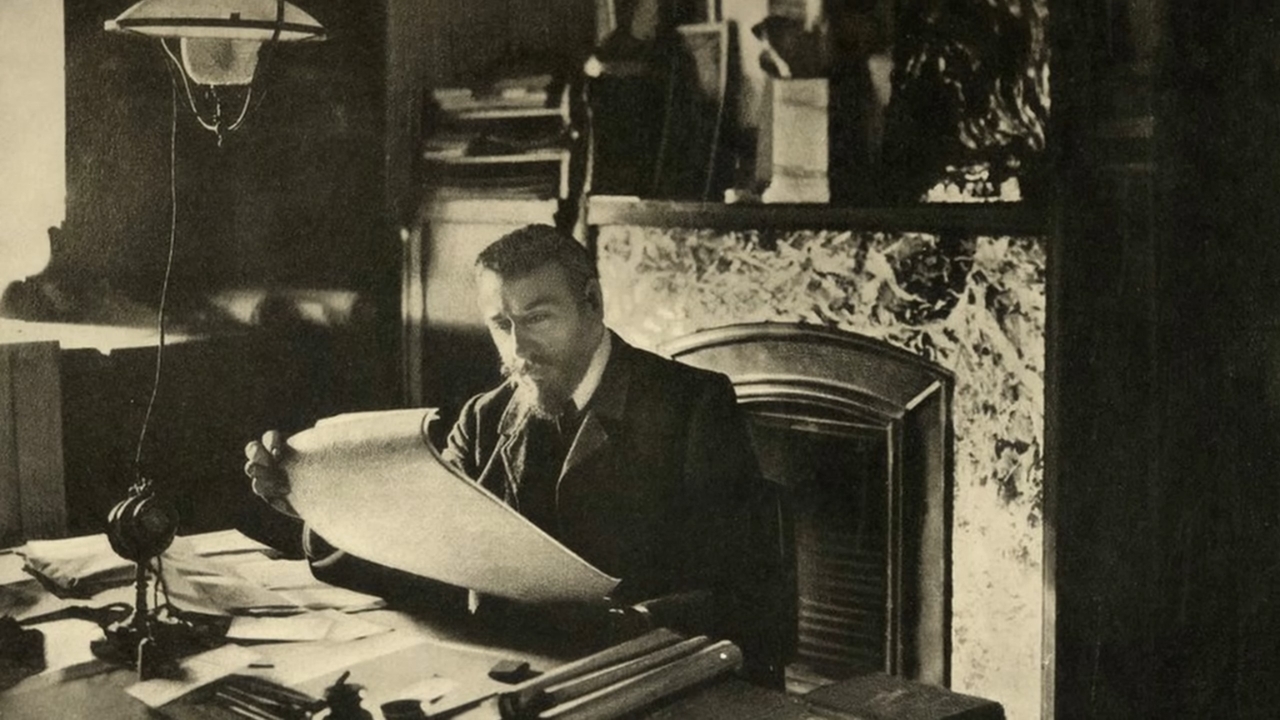
Around three centuries later, Victor Horta helped change the physical appearance of Brussels.
His Hôtel Tassel of 1893 became an early landmark of Art Nouveau. Horta treated iron, glass, staircases, decorative lines, furniture, and natural light as parts of one architectural composition.
Four Brussels buildings associated with him, Hôtel Tassel, Hôtel Solvay, Hôtel van Eetvelde, and his own house and studio, were entered into the UNESCO World Heritage List in 2000.
A visitor can therefore encounter Horta without entering a conventional gallery. His legacy sits directly within Brussels streets, especially around Saint-Gilles, Ixelles, and the areas near Avenue Louise.
The buildings also record a moment when industrial materials such as steel could become elegant domestic architecture rather than remain hidden behind masonry.
René Magritte
View this post on Instagram
René Magritte offers perhaps the strongest modern artistic association with Brussels.
From 1930 until 1954, Magritte lived and worked at Rue Esseghem 135 in Jette. The unassuming ground-floor apartment became a meeting place for Belgian Surrealists, and Magritte produced a significant portion of his work there. The house survives as the René Magritte Museum.
The setting suits Magritte surprisingly well. A painter famous for bowler hats, ordinary rooms, pipes, windows, apples, and cloudy skies did much of his work in an everyday Brussels home rather than a dramatic artist’s studio.
Brussels also holds the world’s largest collection of his work. The Magritte Museum collection at Place Royale preserves more than 230 artworks and archival objects, spanning paintings, drawings, photographs, sculpture, posters, and films.
Writers Who Found Material in Brussels
For several major writers, Brussels became a temporary home charged with strong emotions. Exile, ambition, education, disappointment, and political upheaval all appear in their Brussels stories.
Charlotte Brontë
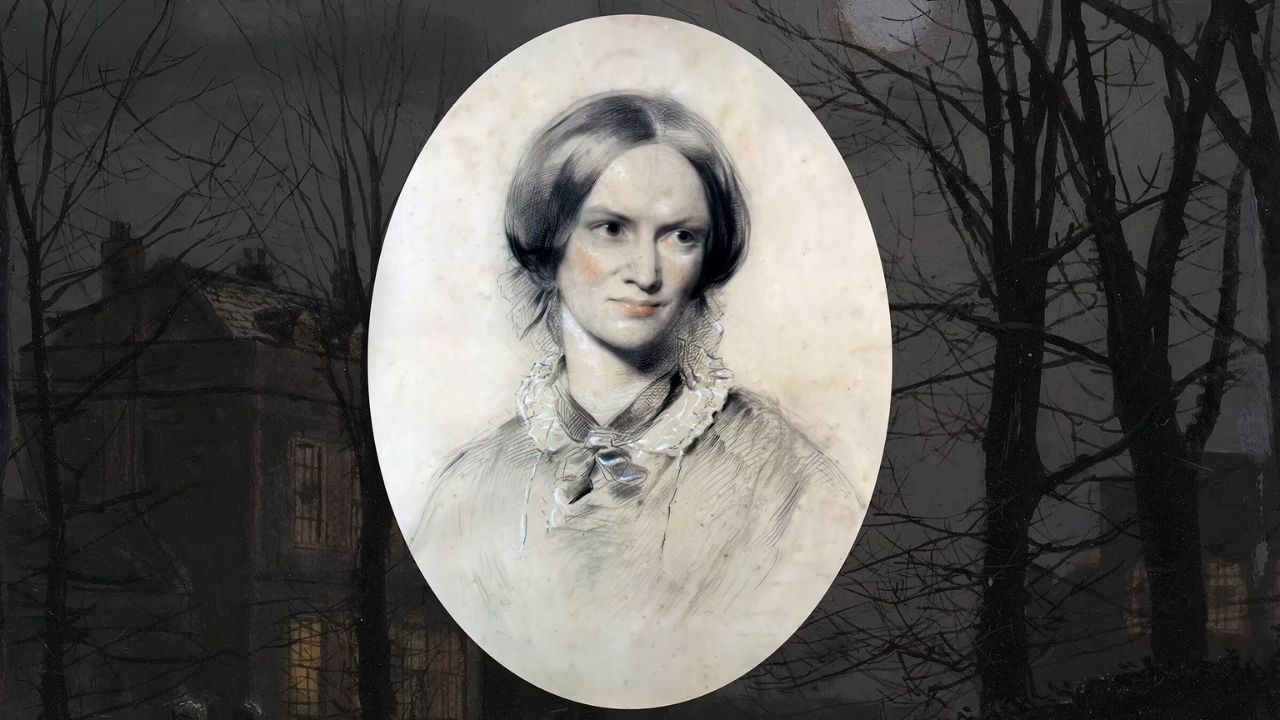
Charlotte Brontë arrived in Brussels with her sister Emily in 1842 to study at the Pensionnat Heger.
Charlotte’s relationship with teacher Constantin Heger became one of the most discussed episodes of her life. Surviving letters held by the British Library reveal how deeply attached she became to him after returning to Yorkshire.
The library identifies Heger as an important real-life model behind Paul Emanuel in Villette. Brontë’s surviving letters preserve part of that relationship.
Brussels subsequently entered her fiction. The Professor and especially Villette draw heavily on her experiences as a foreign woman living and teaching in the city.
The original school disappeared in 1909. A plaque near the former site keeps an easily missed literary connection alive.
Victor Hugo
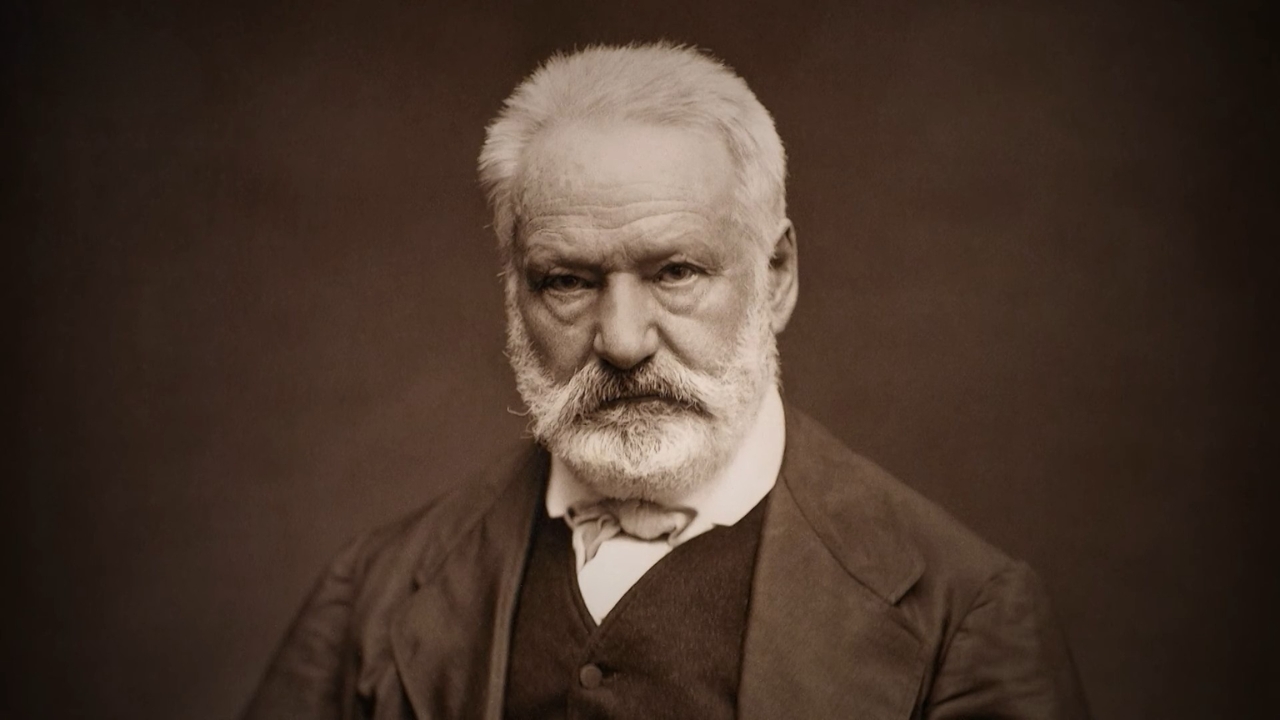
Political turmoil brought Victor Hugo to Brussels under very different circumstances.
After Louis-Napoléon Bonaparte’s 1851 coup in France, Hugo went into exile and reached Brussels in December. He eventually lived at the Maison du Pigeon on the Grand-Place, where a commemorative plaque marks his stay.
City records state that Hugo stayed there in 1852 and wrote part of his anti-Napoleon pamphlet Napoléon le Petit in the building. The connection appears in Brussels’ Grand-Place historical records.
The location creates an evocative image: one of France’s most famous writers looking through his window at Brussels Town Hall while living outside his own country.
Travelers who want to explore this part of the historic centre can also use La Bourse Hotel as a convenient base near the Grand-Place and surrounding streets.
View this post on Instagram
Charles Baudelaire
Charles Baudelaire’s Brussels story carries far less affection.
The author of Les Fleurs du mal spent roughly two years in Brussels between 1864 and 1866. Money troubles, illness, failed professional plans, and growing frustration darkened his stay.
His hostility eventually fed an unfinished manuscript generally known as Pauvre Belgique! The Brussels City Museum has documented the work as a bitter record of his grievances during a difficult period near the end of his life.
Brussels therefore occupies an unusual place in Baudelaire’s biography: a city he disliked intensely, yet observed closely enough to turn into literary material.
Inventors Whose Ideas Passed Through Brussels
Brussels also belonged to the history of invention. Musical instruments and industrial chemistry provide two especially memorable examples.
Adolphe Sax
Saxophone is the right answer! Adolphe Sax was a musical instrument designer born in Belgium. His idea was to create an instrument that combined the best qualities of a woodwind and a brass instrument. #TheMoreEUKnow @BelgiumintheUSA 🎷 https://t.co/1qUuXZU7aB
— European Union in the U.S. (@EUintheUS) July 22, 2025
Adolphe Sax was born in Dinant in 1814, although much of his early development as an instrument maker took place in Brussels.
His father operated a wind-instrument factory there, and Sax began studying at the Royal School of Music in Brussels in 1828. During the 1830s, he experimented with improvements to existing instruments and presented inventions at local industrial exhibitions.
Then came the moment with the famous name attached. At the Brussels Industrial Exhibition of 1841, Sax publicly demonstrated an early saxophone before moving to Paris, where he later patented the instrument. An Adolphe Sax historical timeline records the Brussels debut.
Every jazz solo played on a saxophone consequently carries a small historical thread back to nineteenth-century Brussels.
Ernest Solvay
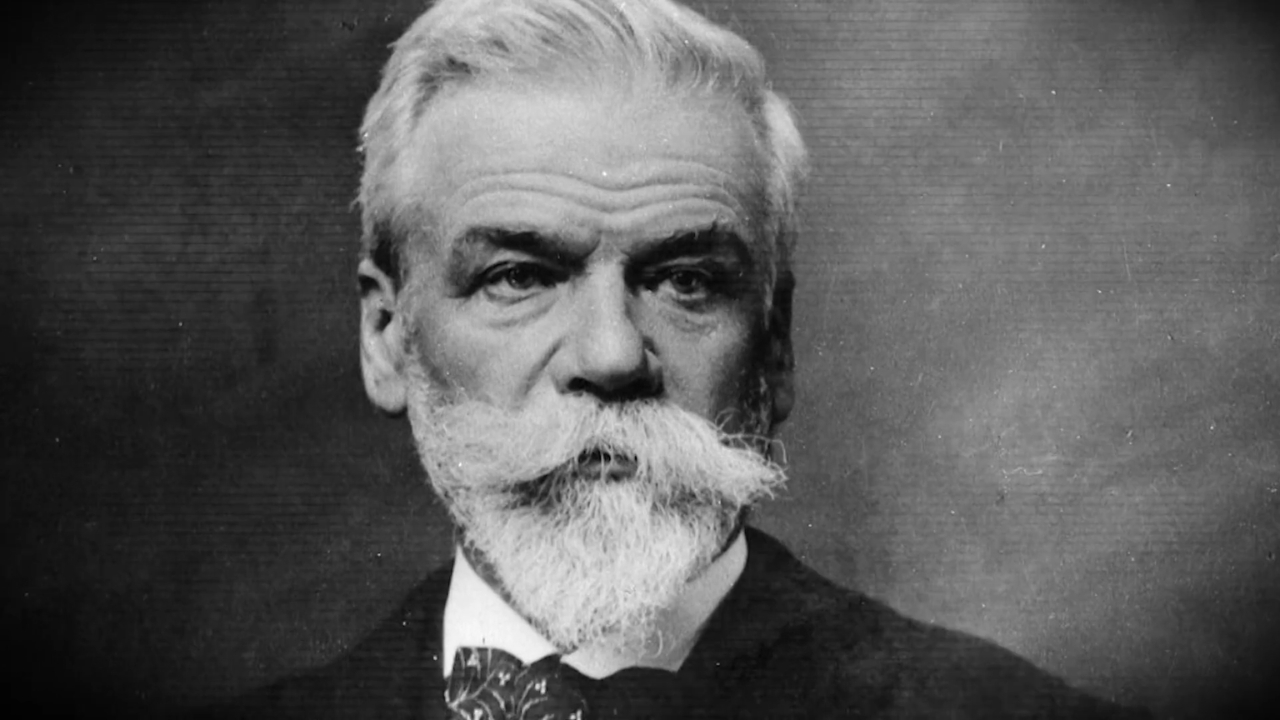
Ernest Solvay connected Brussels with industrial chemistry and, eventually, some of the biggest names in modern physics.
Solvay and his brother Alfred developed an efficient ammonia-soda process for manufacturing sodium carbonate. The company they founded in 1863 expanded rapidly, and by 1900 the Solvay process was being used to produce about 95% of the world’s soda ash, according to the company’s historical overview.
His influence later moved into scientific patronage. The first Solvay Conference on Physics took place in Brussels in 1911, gathering leading physicists to discuss radiation and quantum theory.
Solvay founded an international physics institute the following year and a chemistry institute in 1913. The Solvay Institutes history traces that scientific legacy.
That legacy helped turn Brussels into a meeting point for figures who were reshaping twentieth-century science.
Brussels as a City of Creative Crossroads
@populartravel 🇧🇪 Welcome to Brussels — Europe’s Capital of Power, Culture, and Charm! 🏛️✨ #TravelEurope #DiscoverBrussels #BrusselsVibes #CityOfCulture #ExploreBelgium #brussels ♬ original sound – populartravel
The famous names attached to Brussels share no single story. Bruegel spent his final years there. Horta redesigned its architecture.
Magritte built a Surrealist world from a Jette living room. Brontë converted personal experience into fiction, while Hugo arrived because politics had driven him from France.
Sax used Brussels as an early laboratory for musical invention, and Solvay turned industrial success into support for scientific research.
Following their traces gives Brussels another layer. Streets, churches, houses, museums, and former schools begin to function like pieces of a large cultural biography, with several centuries occupying the same compact city.
