

Choosing the right state in 2025 plays a major role in business survival.
Entrepreneurs gain advantages by aligning their model with tax structure, workforce quality, capital access, and local operating costs.
Data insights come from various references reflecting current trends in onboarding, sector strength, taxes, and business density.
Let’s take a look at states that have risen above all others in this regard.
1. Texas
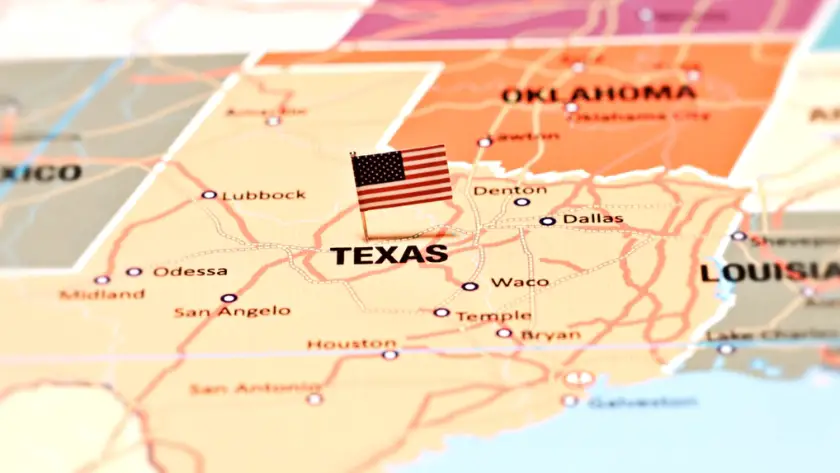
Texas delivers an advantage rarely matched in 2025 thanks to a combination of tax relief, massive consumer demand, and nonstop corporate migration.
Entrepreneurs often choose the state for fast scaling, wide access to talent, and supportive economic policy.
Strong tax incentives create room for reinvestment:
- Personal income tax: 0%
- Corporate income tax: 0% through a franchise structure
- Sales tax: 8.25% combined
The surge of enterprise activity continues as 52 Fortune 500 companies operate across Texas, with major brands such as Tesla, Oracle, and Meta moving their headquarters into the region.
Austin rises as one of the most energetic tech-building cities in the country, supported by founders, remote workers, and investors seeking growth.
A population topping 30 million provides a massive market for e-commerce, services, consumer goods, and logistics operations.
Net domestic migration of +85,267 in 2023-2024 signals strong gains in labor supply, customer volume, and specialization.
Deep academic network fuels innovation.
More than 226 colleges and universities train workers across software development, engineering, energy, transportation, and advanced manufacturing, giving businesses consistent access to talent at various experience levels.
2. Oklahoma
Oklahoma brings substantial value for founders prioritizing affordability, simple regulation, and fast runway expansion.
Costs remain far below national averages, giving local startups a chance to stretch capital during early stages.
Tax policy remains competitive.
Corporate taxes fall between 4-6%, personal rates stay modest, and operating expenses across real estate, utilities, and equipment remain among the lowest in the nation.
Oklahoma City and Tulsa push forward as growing centers for aerospace, oil and gas services, digital technology, and advanced materials.
Both cities continue upgrading infrastructure, attracting corporate projects, and encouraging venture development.
For logistical and operational support, founders can benefit from using a local Oklahoma City storage facility to manage inventory or equipment affordably.
Support for early ventures is strong, and several advantages benefit new founders:
- State-backed grants
- Local incubators and accelerators
- Minimal registration fees
- Clear and straightforward regulations
CPA Practice Advisor ratings show Oklahoma performing well in cost efficiency and administrative simplicity, even without top placement in every metric.
3. Florida

Florida attracts an enormous inflow of talent, capital, and founders thanks to tax advantages, warm weather, and strong logistics.
Personal income tax remains at 0%, corporate income tax sits at 5.5%, and the statewide sales tax averages around 7%.
Mass migration continues at a record pace. Net inflow reached +467,347 people in 2023–24, boosting consumer demand and broadening the labor pool.
Current population levels exceed 23.3 million, creating one of the largest markets for scaling a product or service.
Venture activity accelerates across the state, especially around Miami.
More than $2.1B in venture capital flowed into Miami during the first half of 2024, and new business formation rose sharply, reflected in a 26% increase in worker onboardings.
Supply chain strength sets Florida apart. More than 20 major seaports and airports enable rapid distribution across Latin America and the East Coast.
Many founders leverage the state as a gateway for cross-border commerce and the international movement of goods.
4. Utah
View this post on Instagram
Utah continues building momentum across tech, finance, software, and advanced services.
CPA Practice Advisor assigns a score of 78.00, placing the state third in overall business attractiveness.
Startup creation remains strong, supported by a density of 6.9 startups per 1,000 residents.
Around 38.4% of adults hold a bachelor’s degree, pushing Utah to eighth place nationally for tax competitiveness and business structure.
A culture that encourages entrepreneurship contributes to high survival rates for early-stage companies. Remote work gains strength, giving founders access to national talent while still benefiting from Utah’s cost control.
Salt Lake City and Provo rise as hotspots for innovation.
Investors, engineers, and young companies cluster in these cities due to favorable wages, outdoor lifestyle, and strong university pipelines.
5. North Carolina

North Carolina moves quickly toward becoming one of the most founder-friendly states in the country due to continued tax reform, skilled labor, and research-driven industry growth.
Corporate income tax shifts to 2.25% in 2025 and is scheduled to reach 0% by 2030, while personal income tax moves toward 3.99% by 2026.
Major sectors expand around the Research Triangle, with more than 840 life science firms operating statewide and 634 located within the Triangle alone.
Biotech, pharma, AI-driven medical technology, and software services all maintain strong hiring momentum.
A highly educated workforce strengthens the state’s appeal for startups.
Roughly 43% of workers hold a college degree, and Apple’s $552M investment in Raleigh adds even greater demand for skilled talent.
Consistent policy improvements guide business growth. Infrastructure upgrades and a steady push for tax reductions continue to attract founders seeking long-term stability.
6. South Dakota
View this post on Instagram
South Dakota offers one of the strongest environments for business creation in America.
CPA Practice Advisor assigns a score of 81.13, placing the state at the top of its overall rankings.
No personal or corporate income tax gives founders more room to reinvest. Lean operations benefit significantly when tax pressure remains minimal.
Capital availability elevates South Dakota even further.
A capital index score of 96.4 reflects strong lender support for both early-stage and expanding ventures.
Banks and financial institutions within the state frequently outperform national averages in small-business lending.
New companies enjoy solid longevity with a 3-year survival rate of 58.7%.
Many service-based and rural-focused tech companies view South Dakota as a strategic choice due to its low costs and clean regulatory structure.
7. Georgia

Georgia continues to gain attention from founders targeting engineering talent, distribution reach, and strong economic programs.
Corporate income tax remains at 5.75%, personal income tax at 5.49%, and sales tax at 7.38%.
Growing industries benefit from deep technical expertise.
Georgia employs more than 52,000 software developers and over 44,000 engineers, with a median workforce age of around 37.4 years. A young and experienced population supports rapid scaling.
Atlanta serves as a powerful logistics center. Around 62% of statewide job postings originate there, and companies can reach roughly 80% of the US population within a two-day drive.
Many supply chain and e-commerce founders rely on this access to reduce shipping times and costs.
Several strong programs help companies speed up workforce development:
- Georgia Quick Start, recognized for elite worker training
- Active support from the state’s economic development agencies
These advantages create a strong environment for tech, fintech, logistics, and creative industries.
Summary
Entrepreneurs gain stronger outcomes when aligning their strategy with the advantages offered at the state level.
Texas contributes scale and major tax relief, while Oklahoma creates value through low costs and operational flexibility.
Florida and Georgia add momentum with rapid population gains and powerful logistics channels.
Utah and North Carolina supply well-educated talent and strong innovation activity, and South Dakota rounds out the group through tax simplicity paired with exceptional access to capital.
