From a small Danish carpenter’s workshop in 1932, this iconic toy company has built a global empire.
Its name, derived from the Danish phrase “leg godt,” meaning “play well,” perfectly captures its mission. The brand’s journey from wooden toys to the world’s leading interlocking brick system is a story of remarkable innovation and resilience.
Today, the business operates in over 140 countries with more than a thousand branded stores.
Despite a challenging toy market, the firm reported revenue of nearly $9.5 billion in 2023, demonstrating strong consumer demand. This financial health underscores the brand’s powerful position.
This examination provides a strategic look at the internal and external factors shaping the company’s future. Understanding these dynamics is crucial for any comprehensive business analysis. We will explore how this cultural phenomenon balances tradition with digital transformation and sustainability initiatives to maintain its leadership.
Company Background & Market Position

The journey from Ole Kirk Christiansen’s small workshop to global toy industry dominance represents a remarkable business evolution. This transformation showcases strategic growth and innovative thinking.
History and Global Expansion
Founded in 1932, the company began with wooden toys before revolutionizing play in 1958. The patented interlocking brick design became the foundation for worldwide success.
Today, the brand operates in over 130 countries with 1,031 branded stores globally. Strategic expansion included opening 147 new locations in emerging markets during 2023 alone.
Diverse Product Portfolio and Market Reach
The company’s product range spans multiple segments targeting different age groups. Core offerings include traditional brick systems, DUPLO for young children, and specialized Architecture sets for adults.
Strategic licensing partnerships with major franchises drive significant market appeal. These collaborations include popular themes from Marvel, Disney, and Harry Potter.
Beyond physical products, the business has expanded into digital experiences and educational solutions. This comprehensive approach demonstrates the company’s evolution into a full entertainment ecosystem, as detailed in this comprehensive business analysis.
Product Innovation and Market Trends
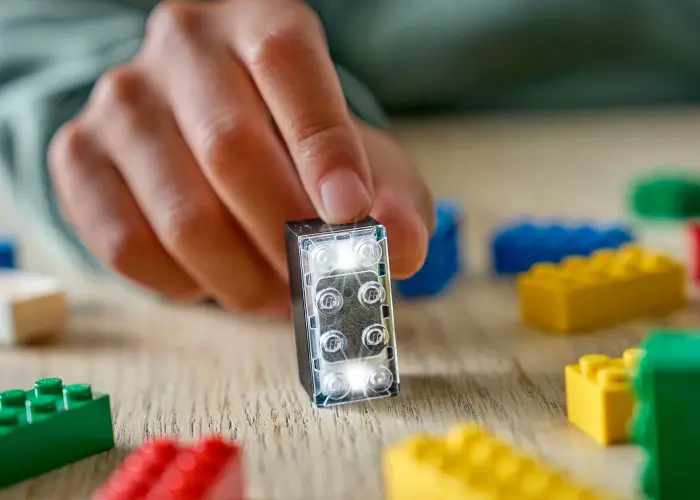
Strategic digital integration has become a cornerstone of the brand’s approach to engaging modern consumers while preserving its core creative values. The company demonstrates remarkable adaptability in a rapidly evolving entertainment landscape.
Commitment to Quality and Digital Integration
The business maintains exceptional product quality that justifies premium pricing. This dedication to durability supports consumer trust and brand loyalty.
Annual refresh of 60% of the catalog shows continuous innovation. This strategy keeps the product line fresh and maintains market relevance.
Digital experiences complement physical building through video games and mobile apps. This hybrid approach creates multiple engagement points for tech-savvy users.
Emerging Trends: AR, VR, and E-Commerce
E-commerce growth represents a significant shift in consumer behavior. One in three toys now sells online, with platform traffic increasing 27%.
Augmented reality apps create interactive experiences by viewing physical products through digital interfaces. This bridges traditional play with modern technology.
Virtual reality integration could revolutionize how consumers interact with products. These innovations position the company to compete with digital entertainment platforms.
Navigating LEGO Weaknesses and Business Challenges

Premium pricing creates significant barriers for budget-conscious families seeking quality building experiences. The company’s products command significantly higher prices than generic alternatives.
This pricing strategy impacts market penetration in price-sensitive segments. It also affects expansion in emerging economies where disposable income is lower.
Pricing Strategies and Product Complexity
Classic creative brick sets typically cost $30-$55 compared to $15 for generic building blocks. This price difference reflects quality but limits accessibility.
Some products have become increasingly complex with thousands of pieces. The Technic Bugatti Chiron contains 3,599 components.
This complexity may deter casual builders and families seeking simpler play experiences. It represents a strategic challenge for broader consumer appeal.
| Challenge Area | Specific Issue | Consumer Impact |
|---|---|---|
| Pricing Strategy | $30-$55 vs $15 generic sets | Limits budget-conscious market segments |
| Product Complexity | Sets with 3,000+ pieces | May alienate casual builders |
| Market Accessibility | Premium positioning | Reduces emerging market penetration |
Sustainability Concerns and Material Dependence
The company relies heavily on plastic materials, particularly acrylonitrile butadiene styrene. Environmental concerns about plastic use continue to grow.
Consumer demand for sustainable products presents both challenge and opportunity. The business aims to transition to sustainable materials by 2030.
Digital competition represents another significant challenge. Competitor Bandai Namco’s video game catalog is approximately four times larger.
Hasbro’s acquisition of entertainment network eOne provides advertising advantages. Counterfeit products also undermine brand integrity despite legal protections.
Exploring Opportunities for Growth and Expansion

Demographic shifts and technological advancements create fertile ground for strategic growth initiatives. The company faces numerous opportunities to expand its market reach and enhance consumer engagement.
New Geographic Markets and Consumer Trends
By 2032, 90% of the world’s 2 billion children will live outside Europe and North America. East Asia will host three-quarters of these young consumers, representing massive expansion potential.
Sustainability initiatives offer another significant opportunity. The commitment to sustainable materials by 2030, backed by a 60% spending increase in 2023, strengthens appeal among eco-conscious families.
Innovative Educational and Personalized Offerings
Augmented and virtual reality technologies can create immersive experiences that blend physical and digital play. These innovations open new avenues for creativity and entertainment.
Personalized sets and minifigures represent additional revenue streams. Educational partnerships with schools worldwide offer growth potential in STEAM learning markets.
The adult fan base presents opportunities for sophisticated product lines. These consumers have greater purchasing power and brand loyalty, as detailed in this growth strategy analysis.
| Opportunity Area | Key Strategy | Growth Potential |
|---|---|---|
| Geographic Expansion | Target East Asian markets with localized products | Access to 75% of global children by 2032 |
| Technology Integration | Develop AR/VR experiences for digital-physical play | Enhanced engagement with tech-savvy consumers |
| Product Personalization | Offer custom sets and minifigures | Additional revenue streams and customer loyalty |
| Educational Partnerships | Collaborate with schools for STEAM learning | Expansion beyond entertainment into education |
Mitigating Threats in the Evolving Toy Industry

The evolving entertainment landscape creates complex threats that demand proactive management strategies. Companies in the toy industry face intense pressure from multiple directions.
Competitive Pressures and Counterfeit Risks
Established competitors like Bandai Namco and Hasbro present significant challenges. These companies offer alternative play experiences that compete for consumer attention.
Video games and mobile applications represent another form of competition. Children increasingly prefer digital entertainment over traditional toys.
Counterfeit products pose a serious threat to brand integrity. Some companies market bricks as “compatible with LEGO” to capitalize on the brand’s popularity.
Economic Fluctuations and Regulatory Challenges
Economic downturns directly impact consumer spending on non-essential items. The company must develop strategies to maintain sales during difficult periods.
Regulatory changes present ongoing challenges for global operations. Safety standards and environmental policies require constant adaptation.
Currency fluctuations affect profitability across international markets. This threat requires sophisticated financial management strategies.
Understanding these dynamics is crucial for any comprehensive business analysis of market positioning.
Conclusion
This strategic examination reveals a company positioned at the intersection of tradition and innovation in the global play market. The brand maintains remarkable resilience through its $13 billion valuation and multi-generational appeal.
The comprehensive analysis highlights both challenges and opportunities. Premium pricing and digital competition represent significant hurdles. However, geographic expansion and sustainable material transitions offer substantial growth potential.
Successful navigation of the evolving toy industry requires balanced strategies. The company must preserve its core creative experience while embracing technological innovation. Ongoing strategic adaptation remains essential for maintaining leadership.
For deeper insights into this dynamic landscape, explore our detailed business strategy assessment. The brand’s future success hinges on effectively leveraging its strengths against emerging market threats.