
From its humble beginnings in 1971 at Seattle’s historic Pike Place Market, this coffee giant has grown into the world’s largest coffeehouse chain. Today, the company operates over 38,000 locations across 86 international markets, serving millions of customers daily.
Under CEO Laxman Narasimhan’s leadership, the organization employs 381,000 people worldwide. The company demonstrated strong financial performance with $35.98 billion in annual revenue and $4.12 billion net profit for fiscal year 2023.
This comprehensive examination provides a strategic framework for understanding the company’s position in the competitive coffee industry. The assessment explores internal capabilities and external market factors that influence business decisions.
Readers will gain insights into how this global brand navigates changing consumer preferences and technological advancements. The evaluation covers the diverse product portfolio that contributes to market dominance.
This 2026 update acknowledges the rapidly evolving landscape that requires continuous strategic assessment. The framework helps stakeholders understand current challenges and future possibilities for the coffee leader.
Overview of Starbucks: Foundation and Global Growth

What originated as a specialty coffee bean supplier at Seattle’s famous public market would eventually transform into a global retail powerhouse. The company’s foundation in 1971 focused on roasting and selling premium coffee beans to local customers.
Historical Milestones and Expansion
Howard Schultz’s acquisition in the 1980s marked a pivotal turning point. Inspired by Italian coffee culture, he reimagined the business as an experiential destination rather than just a product supplier.
This vision fueled aggressive international growth over the following decades. The enterprise nearly doubled its store count in the past ten years through strategic expansion into new markets worldwide.
| Region | 2018 Stores | 2023 Stores |
|---|---|---|
| United States | 14,606 | 17,810 |
| International Markets | 15,341 | 20,228 |
| Total Global Locations | 29,947 | 38,038 |
Global Reach and Market Presence
The organization now operates across more than 80 countries through a dual store model. Company-operated locations represent 52% of stores, while licensed partnerships account for the remaining 48%.
This flexible approach allows adaptation to diverse market conditions. The 2018 milestone, when international stores first outnumbered domestic ones, demonstrated successful global penetration.
Internal Strengths Driving Starbucks’ Success
The organization’s competitive edge stems from a combination of strategic internal capabilities. These advantages provide sustainable market positioning and growth potential.
Strong Brand Recognition and Customer Loyalty
The company maintains exceptional brand value, ranking #48 globally with a $15.4 billion valuation. This powerful brand identity creates deep emotional connections with customers who view the experience as more than just coffee consumption.
A robust loyalty program demonstrates this connection, boasting 32.6 million active U.S. members. The program’s 14% growth reflects how the strong brand maintains customer engagement through mobile payments and personalized rewards.
Impressive Financial Performance and Store Growth
Financial stability is evident through $36 billion annual revenue and $4.12 billion net profit. The company’s expansion to 38,038 stores worldwide showcases successful scaling over the past decade.
Employee treatment strengthens operational excellence, with competitive wages averaging $17.50 hourly and comprehensive benefits.
Forbes rankings as a top employer for women and diversity highlight the progressive workplace culture that supports this financial performance.
Opportunities for Starbucks in a Shifting Market
Market shifts offer substantial development opportunities for premium beverage providers. Changing consumer preferences create new avenues for expansion and innovation.
Innovative Product Diversification and Cold Brew Expansion
The global tea market presents significant growth potential. Valued at $122 billion in 2022, it’s expected to reach $160 billion by 2028.
Cold brew coffee represents another compelling opportunity. Demand is projected to grow at 22.67% annually through 2032.
This segment could reach $16 billion in market value. Product innovation in cold brew varieties offers premium pricing potential.
Leveraging Coffee Subscriptions and Functional Beverages

Coffee subscriptions create predictable revenue streams. The subscription market grows at 10.9% CAGR toward $1.98 billion by 2032.
Functional beverages appeal to health-conscious customers. This market grows at 7.45% CAGR through 2028.
| Beverage Category | Current Market Value | Projected Growth Rate | 2028 Forecast |
|---|---|---|---|
| Coffee Subscriptions | $0.98B (2022) | 10.9% CAGR | $1.98B |
| Cold Brew Coffee | $2.1B (2024) | 22.67% CAGR | $16B (2032) |
| Functional Beverages | $280B (2023) | 7.45% CAGR | $405B |
| Tea Market | $122B (2022) | 4.6% CAGR | $160B |
These opportunities allow Starbucks to diversify beyond traditional coffee. They can attract broader customer demographics and ensure sustained growth.
Weaknesses Impacting Long-Term Growth
The company’s high-cost business model restricts accessibility to budget-conscious consumers. These internal weaknesses require careful management to maintain market position.
High Pricing and Product Recall Challenges
Premium pricing represents one of the most significant weaknesses. The strategy supports above-average employee wages and global expansion. However, it limits the potential customer base.
Price-sensitive shoppers often choose more affordable competitors. A Mashed poll revealed over 21% of coffee lovers disliked a holiday drink. They cited excessive sweetness and steep pricing.
Product safety incidents present another major concern. In March 2024, approximately 440,000 branded mugs were recalled. They posed burn and laceration hazards when microwaved.
Historical food recalls also affected customer trust. Breakfast sandwiches were removed from 250 stores in 2016 due to contamination. A cheese and fruit bistro box contained undeclared cashew nuts.
These product issues damage brand perception and can impact sales. They require significant marketing investment to repair customer trust. This comprehensive weaknesses analysis helps identify areas for improvement.
Navigating Threats in a Competitive Landscape

The competitive beverage industry landscape contains several significant threats that impact market positioning. External challenges require strategic management to maintain competitive advantage.
Intensifying Competition and Imitability of Products
Major chains like Dunkin’ Donuts and McDonald’s McCafe offer similar products at lower prices. This creates constant pressure on premium pricing strategies.
Small local shops provide unique experiences that appeal to customers seeking authenticity. The “buy local” movement encourages support for independent businesses over large chains.
Product imitation remains a persistent challenge. Competitors can easily replicate popular beverages, reducing differentiation in the marketplace.
Supply Chain Disruptions and Raw Bean Price Fluctuations
Arabica bean prices saw dramatic increases during recent global disruptions. These beans represent over 60% of global coffee production.
Third-party supplier strikes have created operational challenges. The Mid-West incident demonstrated vulnerabilities in complex supply networks.
Unionization efforts beginning in 2021 have expanded to thousands of workers across multiple states. This comprehensive threat analysis helps identify areas requiring strategic attention.
Digital Transformation and Customer Engagement Strategies
Mobile platforms have revolutionized the retail experience, creating new pathways for customer interaction and loyalty. The company has embraced digital channels to enhance service delivery and build stronger connections with its customer base.
Mobile App Innovations and Loyalty Programs
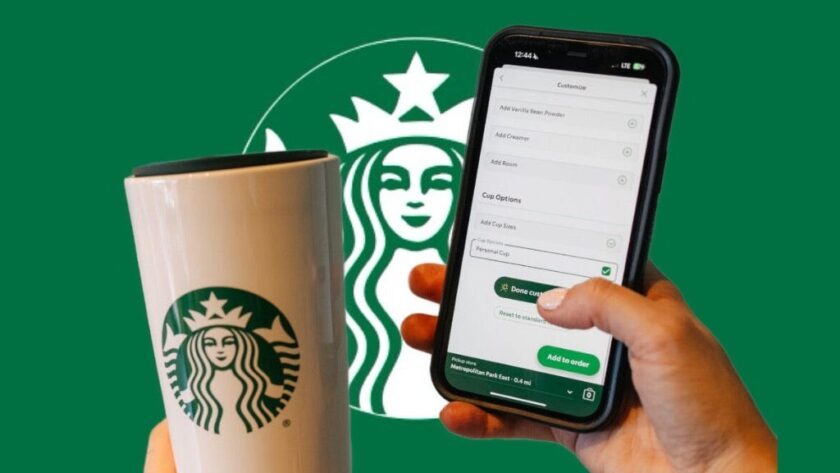
The mobile application offers comprehensive features that streamline the customer experience. Users can pre-order beverages, make payments, track rewards, and receive personalized recommendations.
Active membership in the rewards program grew 14% to reach 32.6 million users. This digital loyalty system drives repeat purchases and strengthens customer retention through strategic incentives.
Members earn stars for every dollar spent, with enhanced earning when using the app. Rewards begin at 25 stars for food, beverages, and merchandise selections.
Additional benefits include mobile payment convenience and pre-ordering capabilities. Free birthday drinks and exclusive promotions create differentiated value for loyal customers.
Social media platforms enable active engagement through creative marketing campaigns. The company responds to feedback and shares brand stories to build community connections.
A three-year modernization plan focuses on automation and personalization for younger demographics. Technological innovations aim to speed up ordering, payment, and delivery systems.
Digital transformation provides valuable customer data that informs product development. These insights support targeted marketing efforts and drive sales growth through personalized experiences.
Recommendations for Strategic Improvements
Implementing targeted improvements across multiple business areas presents opportunities for sustained market leadership. These strategic recommendations address critical challenges while leveraging existing strengths.
Enhanced Product Diversification and Pricing Strategies
A two-tiered pricing approach could broaden customer appeal. Premium offerings maintain quality standards while budget options attract price-sensitive shoppers.
Expanding product lines beyond coffee creates new revenue streams. Tea varieties, functional beverages, and healthy food options appeal to diverse preferences.
“Strategic innovation requires balancing premium quality with market accessibility to maintain competitive advantage.”
Creative marketing campaigns should target younger demographics through social media influencers. These efforts can strengthen brand perception and drive growth.
| Strategy Area | Key Focus | Expected Outcome |
|---|---|---|
| Product Expansion | Tea, functional beverages, seasonal items | Increased market share |
| Pricing Structure | Premium and budget tiers | Broader customer base |
| Marketing Innovation | Digital campaigns, influencer partnerships | Enhanced brand position |
| Operations Improvement | Supply chain resilience, store formats | Better market position |
Community development initiatives and transparent operations build trust with stakeholders. These comprehensive strategic recommendations provide a roadmap for maintaining industry leadership.
Conclusion
As a dominant force in the beverage market, the corporation demonstrates remarkable resilience and growth potential. The company maintains a strong position with 38,038 stores across 86 international markets.
Impressive financial performance includes $35.98 billion in annual revenue and substantial brand value. These metrics highlight the organization’s stability in the competitive coffee industry.
While facing challenges from other chains and market pressures, significant opportunities exist. The corporation can leverage its global presence to capture more market share.
This strategic assessment provides valuable insights for businesses navigating similar landscapes. For a deeper understanding of the company’s strategic framework, explore this comprehensive SWOT analysis.

I am Lazar Bojic, an established professional in digital marketing with almost a decade of experience. Specializing in an array of niches has been my main strength as a content creator. Besides being a content writer, I have participated in creating various other content types, including infographics and script writing for video content creators, across numerous niches. Among my standout works, content creation at wikibiography.in certainly holds a special place.