
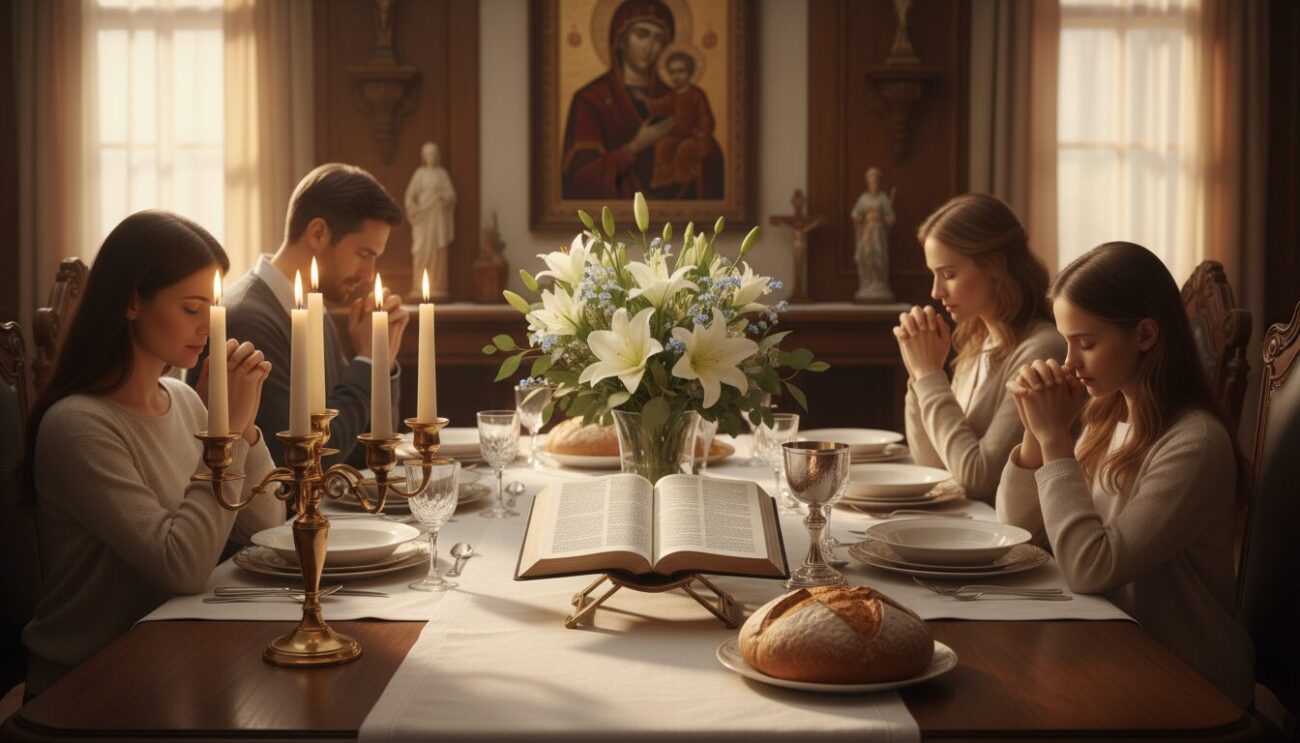
Imagine a busy Tuesday evening in a typical American home. Sarah gathers her children around the table as the aroma of fresh food fills the kitchen. Before anyone picks up a fork, they join hands to share a few quiet moments of gratitude. This simple act of saying prayers transforms their evening into a time of deep connection and peace.
These traditional Catholic prayers for dinner help every family pause and recognize God’s constant grace. Incorporating a short blessing ensures that the meal becomes more than just nutrition. It serves as a vital bridge between a hectic daily life and one’s faith. By including Scripture, these words highlight the many blessings God provides during the week.
Every word reminds the household that the food on their plates is a gift from a loving Creator. Strengthening the bond of the family starts with a heart full of sincere thanks. This spiritual practice offers a beautiful way to make every evening gathering feel truly sacred and intentional. Using specific prayers helps adults and children alike focus on the goodness present in their lives.
Key Takeaways
- Discover how dinner blessings strengthen the spiritual bond between family members.
- Learn to incorporate relevant Bible verses to deepen the meaning of every meal.
- Explore a variety of traditional and contemporary options suitable for all ages.
- Understand the importance of pausing to recognize God’s grace in daily life.
- Transform ordinary dining routines into sacred moments of gratitude and reflection.
- Find simple ways to introduce faith-based traditions to children at the table.
The Sacred Tradition of Blessing Meals in Catholic Faith
Deeply rooted in scripture, the sacred tradition of sanctifying meals connects families to the life of Jesus. Catholic faith teaches that giving thanks before eating mimics the Savior’s own actions. He blessed the bread and fish before feeding the five thousand, showing us how to recognize God’s gifts.
The practice of saying grace involves making the Sign of the Cross to honor the Holy Trinity. This ritual acknowledges God as the provider of all good things. A sincere grace creates a sacred pause in a busy schedule to foster spiritual gratitude.
This prayer allows everyone at the table to shift their focus from worldly chores to divine providence. It reminds the family that every crumb comes from a loving Father. By following this tradition, believers transform an everyday activity into an act of worship.
“The food which we eat is a gift from God; and as we should not receive a gift without thanking the giver, so we should not eat our food without thanking God.”
Each blessing serves as a daily reminder of mercy and love. This communal prayer helps those gathered focus on their bond with the Lord and one another. It turns the dinner table into a place of holy communion and joy.
| Tradition Element | Spiritual Meaning | Biblical Foundation |
|---|---|---|
| Sign of the Cross | Acknowledging the Trinity | Matthew 28:19 |
| Giving Thanks | Recognizing God’s Bounty | 1 Thessalonians 5:18 |
| Breaking Bread | Communion with Others | Luke 24:30 |
1. Traditional Catholic Prayers for Dinner: “Bless Us O Lord”
The “Bless Us O Lord” prayer remains a foundational practice for Catholic families wishing to sanctify their dinner table. Recited for generations across the world, this classic grace helps people pause and acknowledge God’s presence. It is the most recognized way to bless food in the Roman Catholic tradition.
“Bless us, O Lord! and these Thy gifts, which we are about to receive from Thy bounty, through Christ our Lord. Amen.”
Each phrase carries a deep theological significance. When families ask God to bless thy gifts, they admit that all food comes from His divine bounty. Invoking the holy name of Jesus reminds everyone that He is the mediator of all blessings.
This short prayer connects the physical act of eating to spiritual gratitude. Holy Scripture supports this spirit of thankfulness. Psalm 145:15-16 describes how God opens His hand to satisfy the desires of every living thing.
To properly bless food, Catholics usually make the sign of the cross before and after saying grace. This simple habit ensures that even a basic meal honors Christ our Lord. It provides the body with spiritual nourishment alongside physical food.
| Prayer Element | Spiritual Purpose | Theological Focus |
|---|---|---|
| Sign of the Cross | Preparation | Invoking the Trinity |
| Asking a Blessing | Petition | Divine Sanctification |
| Christ’s Name | Mediation | Jesus as the Source |
2. Thanksgiving Prayers Celebrating God’s Abundant Provision
Gratitude changes the atmosphere of a home, especially when a family stops to give thanks for their daily bread. These prayers help us recognize our Heavenly father as the generous source of every meal we enjoy today. We move beyond routine words to show genuine appreciation for the many gifts we receive.
Catholic tradition encourages believers to look at the entire chain of blessings involved in their meal. This includes the farmers who planted seeds and the hands that prepared the delicious food on the table. By acknowledging every step, families see how God orchestrates his providence through others.
“We give Thee thanks for all Thy benefits, O Almighty God, who livest and reignest world without end. Amen.”
Focusing on gratitude helps families grow in several ways:
- It teaches children to recognize God’s hand in the natural world.
- It fosters a sense of appreciation for hard work and labor.
- It transforms a simple meal into a spiritual celebration of grace.
| Element of Provision | Role in the Meal | Spiritual Significance |
|---|---|---|
| The Creator | Provides raw elements | Source of all life |
| The Workers | Harvest and transport | Stewardship of earth |
| The Cook | Prepares and serves | Act of service and love |
By following the command in 1 Thessalonians 5:18 to give thanks in all circumstances, we cultivate humble hearts. This practice reminds us not to take our daily food for granted. It keeps our focus on the Creator rather than just the creation.
Simple prayers help us acknowledge specific blessings and unique family gifts. We offer our sincere thanks for both the physical nourishment and the spiritual strength we find in God’s care. Personalized prayers make each gathering feel more meaningful and heartfelt.
3. Catholic Dinner Blessings for Family and Friends Gathered
Believers often find that inviting friends and family to the table transforms a simple meal into a sacred event. Gathering with loved ones provides a special chance to offer gratitude for the gift of companionship. These moments remind us that God is present in our community.
Sharing food is more than just physical nourishment. It is an act of love that strengthens the bonds of family. In these moments, the meal becomes a vessel for grace and unity.
The early Church modeled this fellowship beautifully. Acts 2:46 describes how they broke bread in their homes with glad and sincere hearts. Today, family friends continue this holy tradition by meeting at the dinner table to share their lives.
One beautiful blessing for such a gathering is:
“Heavenly Father, bless this food, and bless our friends and family who’ve come to dine with us today. Amen.”
These prayers remind us that having people to share food with is a distinct privilege. We thank God for family who support us in times of joy and sorrow. It is a time to rejoice in the help we receive during days of need.
We ask God to fill our hearts with love for our family friends. May every family feel His divine peace during their time together. This spiritual connection turns a regular dinner into a lasting memory of faith.
| Gathering Type | Spiritual Focus | Biblical Connection |
|---|---|---|
| Daily Family Dinner | Strengthening domestic bonds | Acts 2:46 – Sincere hearts |
| Dinner with Friends | Hospitality and fellowship | Hebrews 13:2 – Welcoming others |
| Special Celebrations | Collective praise and joy | Psalm 133:1 – Unity of brothers |
4. Prayers Honoring Those Who Prepared the Meal
Honoring the cook is a beautiful way to show Christian love during an evening gathering. Many people forget that a warm dish results from hours of selfless labor and service. This recognition helps families appreciate the effort required to nourish the household.
A simple prayer recognizes this hard work and turns a routine chore into a holy act. Families often use a traditional blessing to thank food providers and kitchen creators alike. This practice teaches children to value the service others provide on their behalf.
“Thank you, Lord for this food, and bless the hands that prepared it. In Jesus’ Name, Amen.”
It is also important to remember the entire journey from the field to the table. God uses farmers, truckers, and grocers to bring blessings to the family meal. Acknowledging this chain of service connects the act of eating to the wider Christian community.
Our heavenly Father values the quiet service found in every kitchen. When we acknowledge the hands of the cook, we celebrate their love and the food they provide. May the Lord continue to guide the hands of all those who serve others through hospitality.
5. Mindful Catholic Prayers Remembering the Hungry
Mindful prayers for the hungry allow families to express gratitude while acknowledging the suffering of others. These rituals cultivate a humble heart and remind us that our daily bread is a gift. We must recognize that having enough is a privilege that calls for sharing.
We often forget the millions who lack basic food. By focusing on those in need, we connect our meal to the broader mission of Catholic social justice. Jesus identifies with the poor in Matthew 25:35, where He asks us to care for others.
This grace transforms our dinner into a moment of true love. We should always offer prayers for those who have less than we do. Using this time to remember those in need can inspire families to donate to local food banks.
“For food in a world where many walk in hunger; For faith in a world where many walk in fear; For friends in a world where many walk alone; We give you thanks, O Lord.”
May we eat our meals with humble hearts, acknowledging that many people remain hungry today. These reflections teach children to develop deep compassion while appreciating God’s provision in their own lives. Such moments turn a simple meal into an act of spiritual solidarity with the poor.
| Spiritual Focus | Prayer Purpose | Practical Action |
|---|---|---|
| Mindfulness | Remembering the Hungry | Food Bank Donation |
| Social Justice | Biblical Responsibility | Volunteer at Shelters |
| Compassion | Humble Hearts | Sharing Resources |
6. Simple Catholic Dinner Prayers for Children
Small children can easily learn to talk to God through simple, rhythmic words that celebrate the gifts on their table. Teaching them how to say grace helps build a foundation of gratitude that lasts a lifetime. Parents can introduce short prayers that are easy to memorize and fun to recite together.
“God is great, God is good. Let us thank Him for our food. By His hands, we are fed. Give us, Lord, our daily bread. Amen.”
Using a familiar melody makes prayer time engaging for the whole family. For example, children can sing to the tune of “Frere Jacques” to say thank food and recognize their many blessings. This rhythmic approach helps little ones feel confident as they lead the family in these prayers.
- God our Father, God our Father,
- We thank you, We thank you,
- For our many blessings,
- A-men, A-men.
Teaching kids to pray in the name of the Father makes faith feel personal and real. It helps them see the dear lord as a loving provider who cares for them every day. Playful words like “ABCDEFG, Thank you God for feeding me” turn mealtime into a joyful act of grace.
| Prayer Style | Rhythm or Tune | Main Benefit |
|---|---|---|
| Classic Verse | Spoken Rhyme | Easy Memorization |
| Singing Grace | Frere Jacques | High Engagement |
| Alphabet Prayer | A-B-C Rhythm | Early Faith Building |
Every time they offer these prayers in jesus name, they grow closer to God. Parents can make this a natural part of the routine by encouraging each child to use their own name when giving thanks. These simple habits ensure that sincere gratitude becomes a natural part of every young child’s life.
7. Evening Meal Blessings to Close the Day
As the sun sets, gathering for supper offers a holy time to transition from a busy schedule to evening quiet. Families find that this final meal of the day serves as a spiritual bridge to a peaceful night. These prayers help everyone reflect on God’s faithfulness throughout their waking hours.
“We have come to the last meal of this day, to our supper meal. Let us be mindful of how our Lord, at such a meal as this, washed his friends’ feet in an act of holy service.”
https://www.youtube.com/watch?v=sCULsPdNp3A
This spiritual practice often includes a brief examination of conscience before eating. It allows family members to recognize moments of love and areas where they need more grace. Like the disciples on the road to Emmaus, we pause to break bread and celebrate the gift of life.
“The day is coming to a close, and, like the disciples on the road to Emmaus, we pause to break bread together.”
Gathering at the table brings closure to the challenges faced since morning. Families ask for a sense of rest to fall upon their home and hearts. By blessing the food, they invite God’s love to provide physical strength and spiritual rest for the night ahead.
| Prayer Focus | Biblical Connection | Spiritual Benefit |
|---|---|---|
| Holy Service | Washing of the Feet | Promotes humility and kindness |
| Breaking Bread | Road to Emmaus | Recognizing Christ in the home |
| Daily Reflection | Examination of Conscience | Growth in character and peace |
| Nightly Protection | God’s Watchful Care | Preparation for restful sleep |
8. Catholic Grace After Meals: Giving Thanks
When families give thanks after eating, they complete the spiritual circle of dining. This practice of grace after meals ensures that everyone acknowledges receiving God’s gifts rather than just asking for them. It teaches children that gratitude is a lifestyle, not just a pre-eating ritual.
The traditional Catholic prayer of thanks acknowledges God’s eternal reign over all creation. It also includes a beautiful petition for the departed, asking that they find eternal peace. Families usually conclude this ritual by making the sign of the cross and pausing for a brief moment of reflection.
“We give Thee thanks for all Thy benefits, O Almighty God, who livest and reignest world without end. Amen. May the souls of the faithful departed, through the mercy of God, rest in peace. Amen.”
Scriptural examples show Jesus and the apostles offering a prayer of thanks after eating together. For a shorter version, families might offer thanks by saying: “Father, for our food we thank you, and for our joys: help us love you more.” This simple grace reminds everyone that all food comes directly from His hand.
9. Special Occasion Catholic Meal Prayers for Celebrations
Marking a special day with a dedicated prayer helps families recognize God’s constant love. These times of gathering serve as a powerful sign of faith during major holidays or anniversaries. They allow everyone to pause and see the divine hand in their shared milestones.
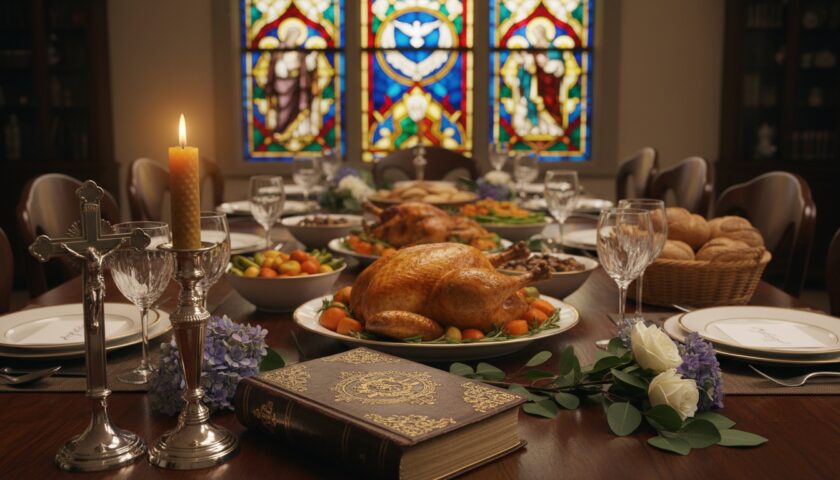
At the center of any celebration, the family table becomes a place of deep joy and connection. A specific blessing reminds those gathered that life itself is a wonderful gift from the Creator. Many families choose to use traditional seasonal words to elevate the atmosphere of the room.
“Creator God and Lord of Life, You who call forth from the darkness of death all those who love You, we rejoice, on this Easter Sunday, in the resurrection from the dead of our Lord, Jesus Christ. Visit our home and this table with Your bright blessing of peace and life.”
Whether it is a formal banquet or a simple picnic today, these things matter to God. This special meal honors holy things like growth and togetherness with love. Using a special occasion prayer acts as a second sign of His presence during these busy times.
| Occasion | Prayer Focus | Scripture Connection |
|---|---|---|
| Easter Sunday | Resurrection and New Hope | Matthew 28:6 |
| Birthdays | Gratitude for the Gift of Existence | Psalm 139:13 |
| Anniversaries | Commitment and Faithful Service | 1 Corinthians 13:13 |
| Christmas | The Incarnation and Peace | Luke 2:11 |
10. Making Dinner Prayer a Daily Family Practice
Integrating a consistent prayer routine into daily meals strengthens the spiritual bond of a family. This practice creates a rhythm where everyone stops to acknowledge their need for God’s grace. It helps children view the world through a lens of gratitude and faith.
Using various prayers prevents the ritual from becoming a boring recitation. Invite friends or children to lead the grace to keep the experience fresh. This inclusive approach teaches the family that the invitation to bless food belongs to everyone.
Establishing this habit does not require a perfect schedule. Even on busy nights, a simple thank you suffices to keep the tradition alive. Consider these practical tips to keep the practice sustainable:
- Rotate Leaders: Let different members lead the prayer each night.
- Add Intentions: Ask each member to share one thing they are grateful for.
- Stay Consistent: Pray at the same time every evening to build the habit.
A busy family creates lasting memories through simple prayers and a short silent prayer for others.
Conclusion
Starting a ritual of dinner grace today builds a strong spiritual foundation for the future. These simple prayers help every family pause and reflect. They recognize the many blessings found in their daily life.
When believers fold their hands, they connect with a deep tradition of faith. Taking a moment to give thanks honors the Father as the provider of all food. This humble practice fills the home with divine love and strengthens the family bond.
Consistent prayers ensure that every meal becomes a sacred moment. They transform an ordinary evening into a time of true communion and gratitude. This daily habit keeps the heart focused on God’s eternal generosity.
| Spiritual Benefit | Impact on Family Life |
|---|---|
| Gratitude | Encourages a positive and thankful household atmosphere. |
| Tradition | Connects modern families to ancient Catholic heritage. |
| Reflection | Creates a necessary pause in a busy, modern schedule. |
| Connection | Strengthens the bond between the Father and His children. |
FAQ
Why do families make the sign of the cross before eating?
Making the sign of the cross honors the holy father. It reminds the family that the jesus name brings grace to the table. This simple act prepares the heart to receive blessings with faith as everyone gathers to thank food creators.
What are some words to say to thank food providers?
It is kind to mention the hands that labored to bring meals to life. People show love as others serve us every day. A dear lord invocation can acknowledge those who grew, harvested, and cooked the food.
How can we remember those in need during a dinner gathering?
Many family friends take a moment to look at the wider world. They ask the christ lord to provide to those facing hard times. It is a beautiful way to share thy gifts with people who lack basic things.
Is there a specific blessing used during a holiday meal?
Festive gatherings frequently emphasize the spiritual rest the Almighty provides. Guests might thank the father regarding abundance and today as they gather around the table to share a blessing. Such prayers connect the heart to the lord and create unity among the friends present.
Is it important to bless food even when the schedule feels busy?
Pausing to offer a brief prayer helps focus the mind on the lord when the schedule feels busy. Small words of thanks recognize that every gift comes from above. The Hallow app suggests this practice keeps the faith strong and shares love with all friends.
