
Did you know that a well-crafted hairstyle can boost confidence and transform one’s entire look? With the rise of social media, women are increasingly seeking unique and creative hairstyles that not only make them stand out but also protect their natural hair.
From flat twists to box braids and cornrows, the world of protective hairstyles offers a myriad of options for women with different hair textures and lengths. These styles are not only aesthetically pleasing but also help in preserving the health of one’s hair by minimizing manipulation and reducing damage.
Key Takeaways
- Discover over 60 stunning freehand hairstyles that combine creativity with practicality.
- Learn various techniques, including flat twists, box braids, and cornrows, suitable for different hair types.
- Understand the importance of protective styles in maintaining hair health.
- Get step-by-step guidance for beginners and experienced stylists alike.
- Explore versatile hairstyles for everyday and formal occasions.
The Beauty and Versatility of Freehand Hairstyles
Freehand hairstyles represent a dynamic intersection of artistic expression and functional styling, catering to diverse hair types and textures. These styles have evolved from traditional African hair culture into contemporary expressions that celebrate natural hair and its versatility.
What Makes Freehand Hairstyles Special
Freehand hairstyles are unique because they allow for personalization without adhering to strict patterns or tools. Unlike conventional styling methods, freehand techniques adapt to individual hair characteristics, making them suitable for various hair types and densities. This adaptability enables infinite variations, ensuring that no two styles look exactly alike. The freedom of movement and creativity in freehand styling adds visual interest to one’s appearance.
The origins of freehand hairstyles in traditional African hair culture have influenced their contemporary expressions, which often incorporate elements like flat twists and protective styles to enhance natural hair textures.
Benefits of Mastering Freehand Styling Techniques
Mastering freehand styling techniques provides several long-term benefits, including reduced styling time and decreased reliance on heat styling, which can damage hair over time. By adopting protective approaches, individuals can enhance their hair health while maintaining stylish looks. The versatility of freehand styles makes them appropriate for various occasions, from professional environments to casual settings and formal events, with minimal adjustments required.
Overall, freehand hairstyles offer a practical and creative solution for individuals seeking to express their personal style while maintaining healthy, beautiful hair.
Essential Tools and Products for Creating Freehand Hairstyles
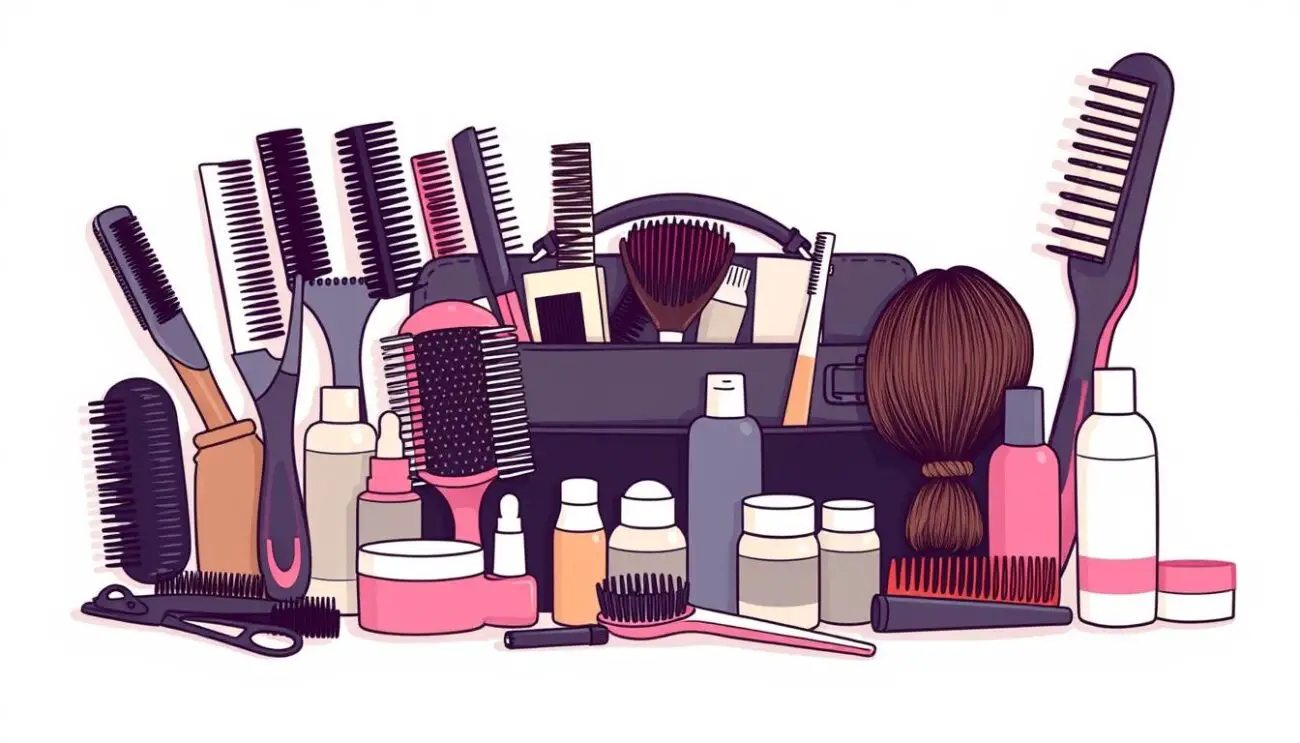
The art of freehand hairstyling demands a specific set of tools and products for optimal results. Achieving beautiful, long-lasting styles requires a combination of the right techniques and high-quality hair care tools and products.
Must-Have Styling Tools
Quality wide-tooth combs and detangling brushes are fundamental for gentle manipulation of various hair textures, making them a must-have for any freehand styling toolkit. Specialized tools like rat-tail combs enable precise partings and sectioning, ideal for intricate styles such as flat twists and cornrows on natural hair. Edge control brushes are also essential for managing baby hairs around the hairline, creating a polished finish.
For quick and easy styling, these tools work great in achieving professional-looking results at home. They allow for a range of styling options, from simple to complex designs.
Recommended Hair Products for Long-Lasting Results
Leave-in conditioners and moisturizing creams provide the necessary hydration for easier manipulation while reducing breakage during styling, which is crucial for hair care. Setting products, including gels, mousses, and holding sprays, help maintain style integrity and longevity, particularly for structured looks that need to last all day.
Natural oils and butters serve dual purposes: they seal in moisture and add shine while providing additional hold for twisted and braided styles. For a quick easy finish, these products work great in achieving long-lasting results.
Preparing Your Hair: Pre-Styling Tips
Before diving into freehand hairstyles, it’s essential to prepare your hair properly to achieve the best results. A well-prepared canvas makes all the difference in the longevity and appearance of your style.
Proper Hair Cleansing and Conditioning
Establishing a consistent hair care routine forms the foundation for successful freehand styling. This begins with proper cleansing using sulfate-free shampoos that gently cleanse the hair without stripping it of its natural oils. Deep conditioning treatments should be incorporated weekly to maintain optimal moisture levels and elasticity, particularly for highly textured natural hair.
Detangling Techniques
Section-by-section detangling using fingers first, followed by wide-tooth combs, minimizes breakage and preserves natural curls. This gentle approach ensures that your hair is tangle-free and ready for styling.
Prepping Different Hair Textures
Different hair textures require customized preparation approaches. For instance, coily hair benefits from maximum hydration, while wavy patterns may need lightweight products to prevent weighing down natural curls. The ideal styling state varies by technique—some styles work best on damp hair for definition, while others require completely dry hair for grip and control.
As noted by hair care professionals, “Pre-styling products should be layered strategically, starting with water-based moisturizers followed by creams and oils to seal in hydration.” Proper preparation significantly impacts style longevity and reduces manipulation needed for maintenance, protecting hair integrity.
Quick and Easy Freehand Hairstyles for Beginners
Beginners can achieve beautiful freehand hairstyles by starting with simple, quick techniques that require minimal experience. These styles not only provide an immediate solution for styling hair but also serve as a foundation for more complex techniques.
5-Minute Twisted Styles
Twisted styles are a great starting point for beginners. They offer a quick and easy way to create versatile looks. Two-strand twists are particularly popular as they are simple to execute and can be adapted to various hair lengths and textures.
- Basic twist-outs involve twisting hair and then unraveling it to create defined curls, a technique that works well for natural hair.
- Simple two-strand flat twists along the hairline, paired with a puff or bun, create polished looks in under 10 minutes.
- The “twist and pin” method allows novices to create complex-looking updos by twisting sections of hair and securing them with bobby pins.
These twisted styles are not only quick and easy but also versatile, making them perfect for beginners looking to experiment with freehand hairstyles.
| Style | Time Required | Hair Type |
|---|---|---|
| Two-strand twists | 5 minutes | All hair types |
| Twist-outs | Overnight | Natural hair |
| Flat twists with puff | 10 minutes | Medium to long hair |
Simple Braided Looks for Novices
Braided styles are another excellent option for beginners. They can be achieved quickly and add a touch of elegance to any look. Beginner-friendly twist braids combine basic braiding with twisting techniques, creating textural interest without requiring advanced skills.
- Mini-twists concentrated at the crown with loose hair at the back offer a balanced style that appears intricate but requires minimal technical ability.
- Simple braids can be dressed up or down, making them suitable for both casual and formal occasions.
By mastering these simple braided and twisted styles, beginners can build their skills and confidence, paving the way for more complex freehand hairstyles.
Stunning Flat Twist Variations
Flat twists have become a cornerstone in freehand styling, offering versatility and elegance. The versatility flat twists offer makes them a fundamental technique in hairstyling, functioning as both standalone styles and foundations for more elaborate looks.
Classic Flat Twisted Updo
Classic flat twisted updo styles create elegant silhouettes by directing twists toward a central gathering point at the crown or nape, making them suitable for formal occasions. “The elegance of flat twisted updos lies in their ability to be both intricate and understated,” notes a hairstyling expert. These styles are perfect for events where a sophisticated look is desired.
Side-Swept Flat Twists
Side-swept flat twists introduce asymmetrical elements that frame facial features strategically, often incorporating a deep side part for dramatic effect. This style adds a touch of sophistication to any look, making it ideal for both casual and formal events.
Flat Twists with Curly Ends
The combination of flat twists with curly ends creates textural contrast, achieved by installing rod sets or flexi rods on the loose ends of completed twists. This technique adds a playful touch to the overall style, making it perfect for those who want to add some flair to their look.
Crown Flat Twist Styles
Crown twist braid arrangements draw attention to the top of the head, creating height and visual interest through circular or spiral patterns. These styles are not only visually appealing but also highlight the versatility of flat twists in creating complex designs.
Geometric partings between flat twists can transform basic techniques into artistic expressions, with diamond, triangle, and curved sections adding sophistication. The variations in flat twists demonstrate how a single technique can produce dozens of distinct looks through directional changes, partings, and finishing approaches.
60+ Gorgeous Freehand Hairstyles: Easy Hairstyles for Women
Exploring the world of freehand hairstyles reveals a myriad of options for women seeking stylish and effortless looks. Freehand hairstyles offer a creative outlet for self-expression, allowing individuals to experiment with various techniques and styles to suit different occasions and personal preferences.
Everyday Casual Styles
For everyday wear, women often prefer styles that are both easy to achieve and maintain. Half-up flat twists paired with loose curls create a relaxed yet polished look. Twisted bangs combined with bun styles offer another versatile option, while asymmetrical side part styles add a touch of sophistication to casual wear.
These styles not only showcase the versatility of freehand hairstyling but also demonstrate how simple techniques can be adapted for daily wear. The twisted low bun, for instance, serves as a foundation that can be customized with varying twist sizes and directional patterns, making it suitable for different settings.
| Style | Description | Occasion |
|---|---|---|
| Half-up Flat Twists | Twists are done on the upper half of the hair, with the lower half left loose. | Casual outings |
| Twisted Bangs with Bun | Bangs are twisted and combined with a bun. | Work or casual events |
| Asymmetrical Side Part | A side part is made, and hair is styled asymmetrically. | Daily wear |
Elegant Formal Options
For formal events, freehand hairstyles can be adapted to create more structured and elegant looks. Full-head flat twists gathered into a twisted updo or cascading twisted styles with embellishments are perfect for such occasions. These styles not only exude elegance but also showcase the versatility of freehand techniques in creating sophisticated hairstyles.
The twisted updo is particularly noteworthy as it can be customized with different twist sizes and accessory additions, making it suitable for various formal events.
Workplace-Appropriate Freehand Styles
In the workplace, protective hairstyles that balance professionalism with personal expression are highly valued. Neat flat twists transitioning into conservative buns or controlled curly sections are excellent choices. These styles not only adhere to workplace norms but also demonstrate a keen sense of style.
Moreover, mixed-technique styles that incorporate both twisted elements and braided components offer dimensional interest while maintaining a polished appearance, making them suitable for professional settings.
Box Braids and Their Creative Variations
Box braids are not just a protective style; they’re a statement piece that can be customized to suit individual tastes. This versatility has made them a staple in the world of hairstyling, offering a wide range of creative possibilities.
Classic Box Braids Styling Tips
Classic box braids remain a foundational protective style, with modern approaches focusing on scalp care, tension management, and proper installation techniques for hair health. To achieve a flawless look, it’s essential to start with clean and conditioned hair. The size of the braids can vary from micro to jumbo, each offering different aesthetic effects and maintenance considerations.
| Braid Size | Aesthetic Effect | Maintenance Consideration |
|---|---|---|
| Micro | Delicate, intricate look | High maintenance, time-consuming |
| Medium | Balanced look, versatile | Moderate maintenance |
| Jumbo | Bold, statement-making | Low maintenance, quick to install |
Box Braids with Unique Partings
Strategic partings transform standard box braids into personalized statements. Diamond, triangular, and curved sections create distinctive patterns that add visual interest to the overall look. Experimenting with different parting styles can elevate the basic box braids look, making it more sophisticated and tailored to individual preferences.
Accessorizing Your Box Braids
Accessorizing elevates the basic box braids look through the strategic placement of cuffs, beads, rings, and colored thread that complement personal style and outfit coordination. These accessories not only add a decorative touch but also help in personalizing the braids, making them stand out.
Box Braids Combined with Other Techniques
The box braids cornrows combination technique features cornrowed sections (typically at the temples or crown) transitioning into box braids, creating textural contrast and unique silhouettes. Advanced combinations incorporate flat twisted sections, cornrow accents, or twisted elements alongside traditional box braids for multidimensional protective styles.
By combining box braids with other techniques and accessorizing, individuals can create a look that is not only protective but also reflects their personal style and creativity.
Protective Freehand Styles for Hair Health
Freehand styles that protect hair from environmental stressors and mechanical damage are vital for overall hair well-being. Protective styling is a crucial aspect of hair care that involves techniques and styles that minimize hair manipulation, reduce damage, and promote hair health.
Why Protective Styling Matters
The science behind why hair needs protected relates to the vulnerability of the hair shaft, particularly for highly textured hair types where the cuticle may be naturally raised. Protective styling fundamentally aims to minimize environmental damage, reduce mechanical manipulation, and retain moisture—three critical factors in maintaining hair integrity.
“Protective styling is not just about reducing daily maintenance; it’s about creating a shield around your hair to protect it from damage.”
Low-Manipulation Protective Options
Low-manipulation protective options include styles that can remain intact for extended periods without daily restyling, such as two-strand twists, flat twist updos, and braided arrangements. A successful protective hairstyle balances complete coverage of vulnerable ends with appropriate tension that doesn’t stress the hairline or create scalp discomfort.
| Style | Description | Benefits |
|---|---|---|
| Two-Strand Twists | A simple style where hair is twisted in two strands | Reduces tangling, promotes hair growth |
| Flat Twist Updos | A style where hair is twisted flat against the scalp and styled up | Minimizes hair manipulation, stylish |
| Braided Arrangements | Various braiding techniques used to style hair | Reduces breakage, versatile styling options |
Nighttime Protection for Freehand Styles
Nighttime protection protocols ensure hair stays protected during sleep through satin bonnets, scarves, or pillowcases that minimize friction and moisture loss. This is crucial for maintaining the health and integrity of freehand styles.
By incorporating these protective measures, individuals can enjoy healthy, resilient hair that looks great and remains protected from damage.
Freehand Styling for Different Hair Lengths
Whether you have short, medium, or long hair, freehand styling offers a range of creative possibilities. The key to mastering freehand styles lies in understanding how to work with your hair’s natural texture and length.
Short Hair Freehand Techniques
For short hair, freehand techniques focus on enhancing definition and shape. Methods such as finger coiling and mini-twists are effective for creating textured looks that work with the natural growth pattern of the hair.
Flat twists can also be adapted for short hair, particularly for tapered cuts, to create fringe effects or side-swept arrangements that highlight facial features.
- Emphasize definition and shape through finger coiling and mini-twists.
- Use flat twists to create fringe effects or side-swept arrangements.
Medium-Length Hair Options
Medium-length hair offers the versatility of partial updos, where flat twists can secure some sections while leaving others free. This creates balanced compositions with visual interest. The “pineapple method” can be adapted for medium lengths, serving as both a protective hairstyle and styling technique that preserves curl patterns while creating height and movement.
- Utilize partial updos with flat twists for a balanced look.
- Adapt the “pineapple method” for added height and preserved curl patterns.
Long Hair Freehand Masterpieces
Long hair presents unique opportunities for elaborate flat twists that travel the entire head length, creating dramatic patterns that showcase the hair’s natural flow. Sectional styling allows for creative combinations, such as twisted crowns transitioning to loose ends or asymmetrical arrangements that distribute weight effectively. It’s also crucial to consider protective approaches that prevent traction at the hairline due to the increased weight and tension of longer styles.
- Create elaborate flat twists for dramatic patterns.
- Use sectional styling for creative combinations that manage the weight of long hair.
Twisted Updos That Make a Statement
The art of creating twisted updos is a nuanced one, requiring precision and creativity to achieve a statement look. Twisted updos offer a versatile canvas for self-expression, suitable for a wide range of occasions from formal events to casual gatherings.
Loosely Twisted Formal Updos
Loosely twisted formal updos create an effortlessly elegant appearance through intentionally relaxed tension and organic placement. This style is ideal for romantic occasions and softer aesthetics, embodying the essence of a “loosely twisted updo.” The relaxed, undone look adds a touch of sophistication and whimsy, making it perfect for brides or anyone attending a formal event.
Structured Twisted Buns
Structured twisted buns positioned at the nape of the neck offer classical silhouettes with modern execution. This “low bun” style provides a secure and elegant look that can withstand extended wear, making it a practical choice for long events. The precision involved in crafting a structured twisted bun ensures a polished finish, elevating the overall appearance.
Half-Up Twisted Styles
Half-up twisted styles strike a balance between the security of partial updos and the movement of free-flowing sections. This versatile look is appropriate for various settings, from workplace environments to social gatherings. The incorporation of “braided twisted” elements can add texture and visual interest, enhancing the overall style.
Twisted updos that make a statement often incorporate architectural approaches, including deliberate directional changes, stacked elements, and negative space to create visual interest and dimensional complexity. Crown-focused twisted arrangements draw the eye upward, creating height and presence while showcasing intricate detailing and technical precision. Strategic “imperfection,” such as allowing select tendrils or edges to remain free, creates softness that frames facial features, adding a touch of elegance to the overall look.
- The “twisted updo” can be customized to suit various hair textures and lengths, making it a versatile option.
- Incorporating different techniques, such as braiding or twisting, can enhance the structural integrity and visual appeal of the style.
- Accessories like beads or cuffs can be added to twisted updos to give them a personalized touch.
Cornrow and Flat Twist Combinations
The fusion of cornrows and flat twists creates stunning hairstyles that showcase technical versatility in black hair styling. This combination technique leverages the strengths of both methods to produce intricate, long-lasting designs.
Side-Cornrow Styles
Side-cornrow styles paired with contrasting side twists create balanced asymmetry, framing facial features while showcasing technical versatility. This approach allows for a dynamic look that is both elegant and durable. The technical distinction between cornrows and flat twists lies in hand positioning and feeding technique, enabling stylists to create varied patterns.
Geometric Pattern Combinations
Geometric pattern combinations utilize both cornrows and flat twists strategically. Cornrows provide definition and structure, while flat twists add dimensional texture and softer transitions. The substitution of french braids for traditional cornrows in certain sections creates textural variety and depth, particularly effective when transitioning between different pattern directions.
| Technique | Characteristics | Benefits |
|---|---|---|
| Cornrows | Raised, attached braids on the scalp | Definition, structure |
| Flat Twists | Dimensional texture, softer transitions | Adds variety, enhances visual appeal |
| French Braids | Textural variety, depth | Effective for transitioning between patterns |
Cornrows with Twisted Accents
Cornrows with twisted accents often feature cornrowed foundations that bloom into twisted ends, creating visual interest through technique transitions. Curved cornrow patterns flowing into complementary flat twists create organic, flowing designs that contour to head shape while maintaining structural integrity. These combination approaches demonstrate the technical relationship between different braiding and twisting methods while offering enhanced style longevity.
Faux Locs and Temporary Loc Styles
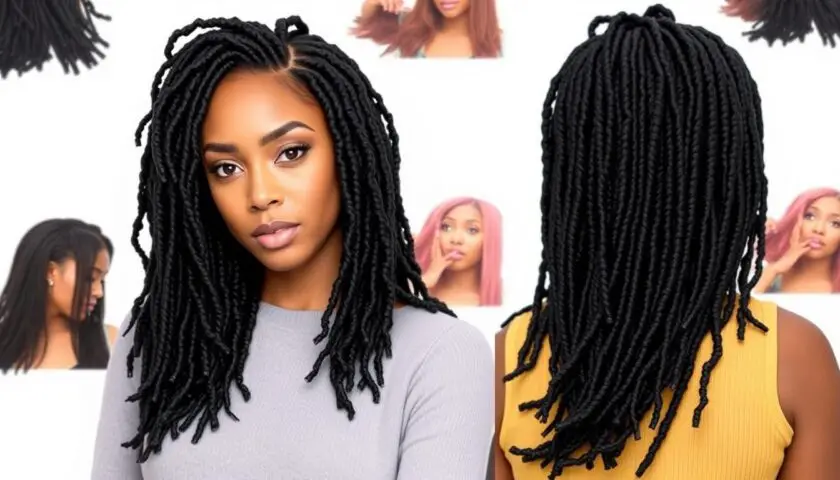
The growing interest in faux locs stems from their ability to mimic mature locs without long-term commitment. Faux locs are a versatile protective hairstyle that can be achieved using various techniques and hair types.
Creating Freehand Faux Locs
Creating faux locs involves wrapping extension hair around small sections of braided natural hair, forming cylindrical structures that resemble mature locs. The crochet method is efficient for full-head installations, while individual wrapping provides more natural-looking results at the hairline and parts. Various materials like yarn, Marley hair, and human hair extensions can be used, each offering distinct visual effects and maintenance considerations.
Faux locs are wrapped around natural hair to create a temporary, protective style that is both aesthetically pleasing and beneficial for hair health. The technique used can significantly impact the overall appearance and longevity of the style.
Styling and Maintaining Temporary Locs
Styling options for faux locs are diverse, including half-up arrangements, full updos, and accessorized styles that showcase the versatility of this protective hairstyle. To maintain faux locs, it’s essential to focus on scalp care, moisture management, and edge preservation. Regular maintenance ensures hair health during the extended wear period and allows wearers to enjoy their faux locs without compromising their natural hair.
Proper care and styling can extend the life of faux locs, making them a convenient and stylish protective hairstyle option. The temporary nature of faux locs makes them ideal for style experimentation, allowing wearers to experience loc aesthetics while maintaining styling flexibility.
Adding Visual Interest: Accessories and Color
The right accessories and color choices can significantly elevate the aesthetic of freehand hairstyles, making them stand out. By incorporating thoughtful additions, individuals can personalize their looks and add a unique touch.
Beads, Cuffs, and Jewelry for Freehand Styles
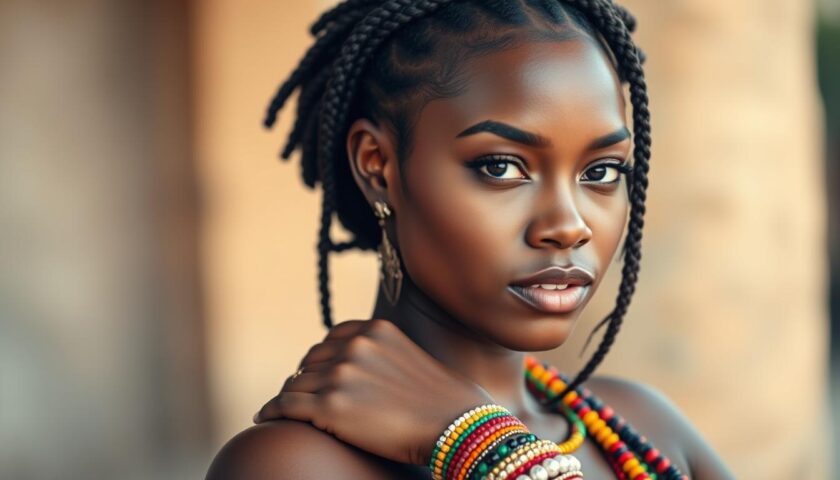
Strategic accessorizing transforms basic freehand styles into personalized statements. Metal cuffs and beads introduce reflective elements that catch light and draw attention to specific areas, particularly effective when positioned to highlight directional changes in braided or twisted patterns.
- Metal cuffs and beads add a reflective quality that enhances the hairstyle.
- Thread-wrapping techniques create subtle color integration that complements natural black hair.
- The strategic preservation of natural curls in specific sections while accessorizing others creates textural contrast.
Incorporating Colorful Extensions
Temporary color approaches using colored extensions, chalk, or washable formulations allow for experimental expression without chemical processing or commitment. This method enables individuals to try new colors and styles without long-term dedication.
- Colored extensions offer a versatile way to add color.
- Washable formulations provide a temporary color solution.
Seasonal Accessory Trends
Seasonal accessory trends influence selection—lighter materials like wooden beads and fabric wraps for summer, and more substantial metal components and jewel-toned accents for winter occasions. This allows individuals to update their hairstyles according to the season.
- Lighter materials are preferred for summer.
- More substantial metal components are favored for winter.
By thoughtfully incorporating accessories and color, individuals can add visual interest to their freehand hairstyles, creating unique and personalized looks that reflect their style and preferences.
Occasion-Specific Freehand Hairstyles
From formal events to casual outings, freehand hairstyles offer a diverse array of styling options. The key to a great look lies in understanding the occasion’s requirements and adapting your hairstyle accordingly.
Wedding and Special Event Styles
Wedding styles often feature elegant twisted arrangements that frame facial features while maintaining structure throughout extended celebrations. A formal low bun positioned at the nape neck area is a timeless foundation that can be customized with twisted elements, braided accents, or decorative additions. These styles not only look beautiful but also keep hair protected and manageable during long events.
Vacation-Ready Freehand Looks
Vacation-ready protective hairstyles prioritize longevity, moisture retention, and versatility. Styles that transition from beach to evening settings without complete reinstallation are ideal. Practical considerations for travel styles include maintenance simplicity, adaptability to different environments, and minimal required styling products or tools. Protective hairstyles, such as braids and twists, are perfect for vacations as they are low maintenance and can be styled in various ways.
Festival and Concert Hair Ideas
Festival and concert looks often embrace more experimental approaches with temporary color, unconventional accessorizing, and structural elements that create distinctive silhouettes. Weather considerations significantly impact occasion styling, with humidity-resistant techniques for summer events and wind-secure approaches for outdoor celebrations. These occasion-specific adaptations demonstrate how core freehand techniques can be modified for practical requirements while maintaining a looking fresh take on traditional approaches.
Maintaining Your Freehand Styles
Proper care is crucial for extending the life of your freehand hairstyle. Maintaining these styles involves a combination of daily routines, protective measures, and strategic refreshing techniques.
Daily Care Routines
Effective daily care routines are essential for maintaining freehand styles. This involves balancing moisture maintenance with style preservation. Using diluted leave-in conditioners applied with precise applicator bottles can help achieve this balance. Nighttime protection is also critical, with satin bonnets or scarves preventing friction damage and moisture loss during sleep. Additionally, edge maintenance requires specialized attention, using appropriate products and minimal manipulation to preserve fragile hairline areas.
- Use a satin bonnet or scarf at night to protect your style.
- Apply a diluted leave-in conditioner to maintain moisture.
- Minimize manipulation around the hairline to preserve edges.
Extending the Life of Your Style
To extend the life of your freehand style, it’s essential to adopt practices that minimize damage and maintain the integrity of the style. Strategic refreshing techniques for styles like two side twists allow for partial renewal without complete reinstallation, focusing on perimeter sections and nape neck areas that experience the most friction. Moisture management must be balanced with product buildup concerns; lightweight refresher sprays can provide hydration without creating residue.
When and How to Refresh Your Look
Recognizing when to refresh your freehand style is crucial for maintaining its appearance. Techniques such as re-twisting or re-braiding can revive the style, particularly in areas that are most prone to frizz or unraveling, like the nape of the neck. The natural curls pattern that emerges from unraveled twists or braids can also create secondary styling options, extending the versatility of initial installations. Refreshing your look can be as simple as re-styling the edges or adding a few decorative elements.
- Re-twist or re-braid sections that are unraveling.
- Use a lightweight refresher spray to add moisture.
- Consider re-styling edges for a refreshed look.
Conclusion
The art of freehand hairstyling encompasses a broad spectrum of creative techniques that cater to diverse hair types and personal styles. Techniques such as flat twists, box braids, and twist braids form the foundation of this styling approach, offering versatile building blocks that can be personalized for unique results.
One of the significant advantages of freehand hairstyling is its protective benefits. By minimizing hair manipulation and shielding the hair from environmental factors, these styles contribute to long-term hair health. This aspect is particularly beneficial for natural hair, which can be prone to damage from excessive styling.
The cultural significance of freehand hairstyling cannot be overstated, as it draws upon traditional black hair styling techniques while evolving to incorporate modern trends and preferences. The adaptability of these methods to various hair textures, lengths, and occasions underscores their practical versatility.
Accessorizing options, such as beads, cuffs, and jewelry, add visual interest to freehand styles, elevating basic techniques into elaborate looks. The continued innovation in this field ensures that freehand hairstyling remains a dynamic and relevant aspect of contemporary beauty culture.
FAQ
What are the benefits of mastering freehand hairstyling techniques?
Mastering freehand hairstyling techniques provides long-term benefits, including reduced styling time, decreased reliance on heat styling, and enhanced hair health through protective approaches.
What are the essential tools for creating freehand hairstyles?
Essential tools include quality wide-tooth combs, detangling brushes, rat-tail combs, edge control brushes, and products like leave-in conditioners, moisturizing creams, and setting products.
How do I prepare my hair for freehand styling?
Establishing a consistent hair care routine, including proper cleansing, deep conditioning, and detangling, is crucial for successful freehand styling.
What are some quick and easy freehand hairstyles for beginners?
Beginners can start with two-strand twists, basic twist-outs, simple two-strand flat twists, and beginner-friendly twist braids, which offer versatile looks with minimal experience.
How can I add visual interest to my freehand hairstyles?
Strategic accessorizing with beads, cuffs, jewelry, and colorful extensions can transform basic freehand styles into personalized statements.
What are some tips for maintaining freehand styles?
Effective daily care routines, nighttime protection, edge maintenance, and strategic refreshing techniques can help extend the life of your style.
Can freehand hairstyles work for different hair lengths?
Yes, freehand hairstyles can be adapted to different hair lengths, from short hair to long hair, using various techniques like finger coiling, mini-twists, and flat twists.
How can I protect my hair while wearing freehand styles?
Protective styling aims to minimize environmental damage, reduce mechanical manipulation, and retain moisture, and can be achieved through styles like two-strand twists, flat twist updos, and braided arrangements.
What are some occasion-specific freehand hairstyles?
Freehand hairstyles can be adapted for various occasions, such as weddings, vacations, and festivals, by modifying core techniques to suit different settings and requirements.
